Backlinks and AI Search Visibility Report
Discover the latest trends in backlinks and AI search visibility with our 2026 report. Boost your rankings now.
Backlinks and AI Search Visibility Report
AI search visibility is the measure of your content's presence and citation within generative AI outputs like Google AI Overviews and ChatGPT, which now prioritizes semantic relevance and direct answers over traditional link equity for true prominence. This monumental shift fundamentally redefines what makes content successful.
Key Characteristics:
- Semantic Understanding: LLMs interpret meaning and conceptual relationships, not just keywords.
- Citation-Driven: Success means appearing as a cited source in AI answers, not merely a top organic link.
- Brand Authority: Strong brand mentions and entity recognition are paramount for trust.
- Answer-First Content: Direct, concise answers structured for extraction are highly favored.
Many founders ask if traditional backlinks still matter. The short answer is yes, but their role has evolved dramatically. Google, for instance, globally expanded AI Overviews to over 200 countries and 40 languages in May 2025, a clear sign of this permanent change. A Pew Research Center study shows that while 18% of searches trigger AI summaries, they led to only 8% traditional link clicks.
By the end of this report, you will understand how backlinks contribute to AI indexing for startups and implement effective strategies for Perplexity SEO and Google's Search Generative Experience links without chasing outdated metrics.
The AI Search Revolution: From Backlinks to Citations
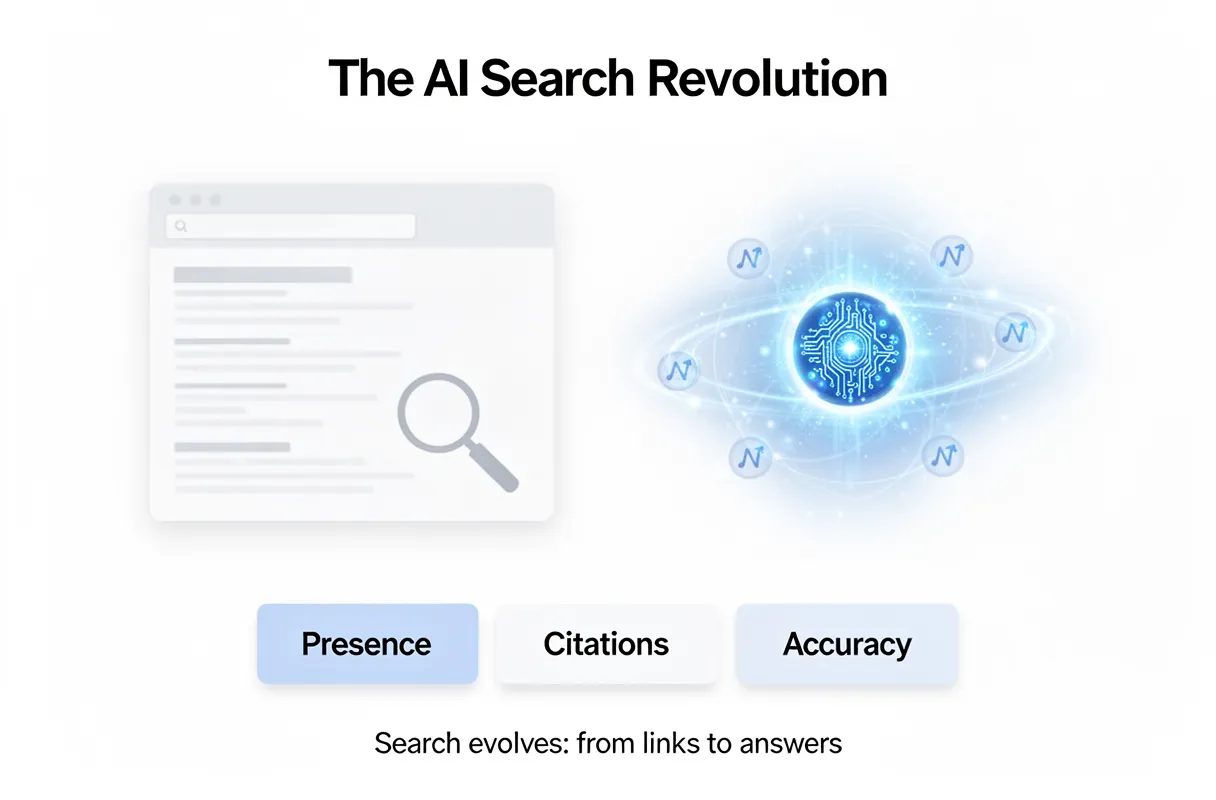 AI search success is defined by presence, citation, and accurate representation in AI-generated answers, moving beyond traditional page rankings. This shift is a permanent change. A Pew Research Center study shows that while 18% of searches trigger AI summaries, they led to only 8% traditional link clicks.
The digital search landscape has fundamentally changed. Gone are the days when simply ranking #1 on Google meant dominating search results. Today, AI is the gatekeeper. Google's global expansion of AI Overviews to over 200 countries and 40 languages in May 2025 signifies this permanent shift. The introduction of Gemini 2.5 has fueled this, reportedly leading to a 10%+ increase in usage for queries triggering these AI summaries.
Think of traditional search like a library card catalog. You find a book (a webpage) based on keywords and author. AI search, however, is more like a knowledgeable librarian who reads many books and synthesizes the information for you. They cite their sources, but they don't necessarily give you the full book list first. This is why understanding how historical backlink quantity goals contrast with modern AI search visibility is so critical.
This means old SEO tactics are becoming obsolete. The focus has shifted dramatically from chasing page rankings to ensuring your content is discoverable and cited by AI models like ChatGPT, Perplexity, and Microsoft Copilot. If your content isn't structured for AI extraction, even a #1 Google ranking might be overlooked. This fundamental change impacts how we approach building visibility.
Mastering AI Citation: Strategies for Content & Authority
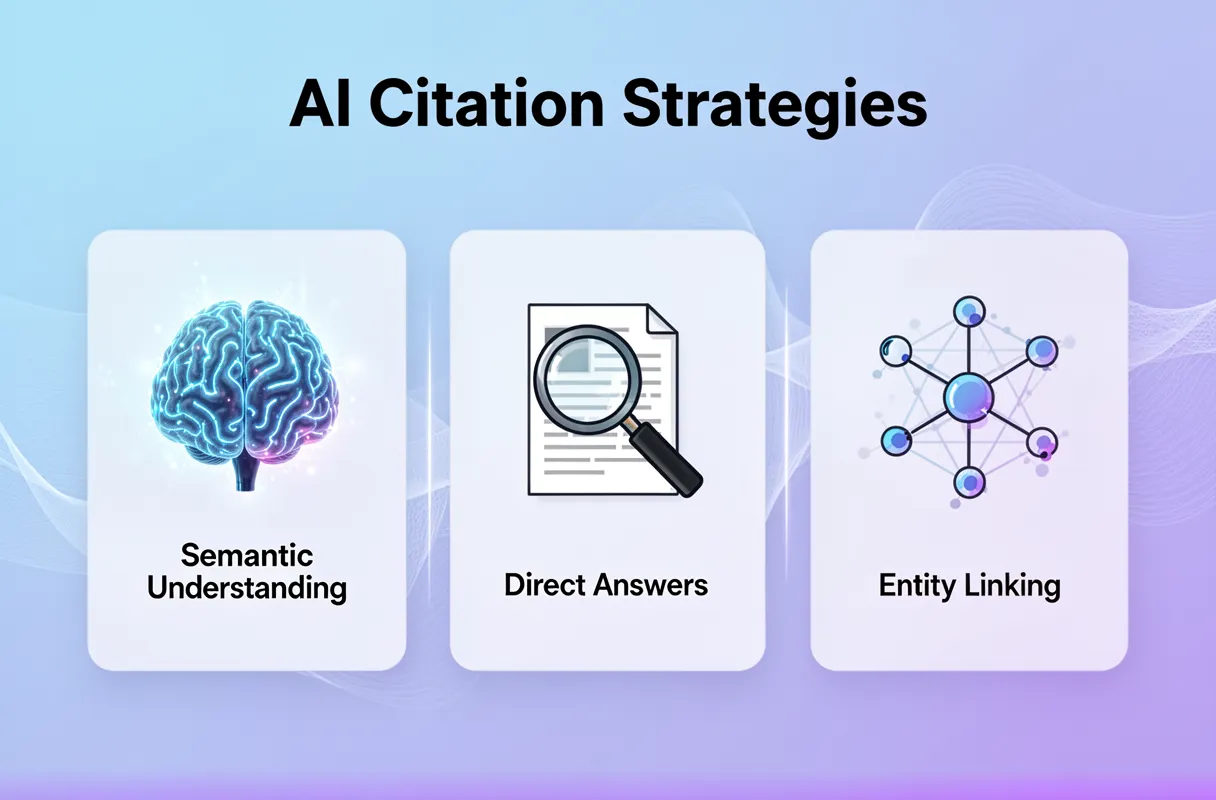 To win AI search visibility, your content must speak the language of LLMs, prioritizing conceptual understanding over mere keyword matching. This means shifting your strategy from traditional keyword optimization to a focus on entity relevance and clear, extractable answers.
AI models like ChatGPT and Perplexity process information semantically, grasping the meaning and connections within your content. A page ranked #1 by Google might be ignored by an LLM if its core ideas aren't presented in a way that's easily understood and isolated for summarization. Conversely, content structured for AI extraction can achieve high visibility even without top-tier traditional rankings. For an in-depth analysis of how LLMs select sources and the signals that matter most for citation, explore this report.
Here are three core strategies for optimizing your content for LLM citations:
-
Answer Directly and Concisely: LLMs thrive on direct answers. Front-load your most important information and ensure each piece of content addresses a specific user intent with a clear, standalone answer. This aligns with the "Answer-First" Protocol for AI. Think about how you'd explain a concept to someone in 30 seconds – make your content do the same.
-
Structure for Semantic Understanding: Go beyond basic keywords. Identify and use specific named entities relevant to your topic (e.g., instead of "use a CRM," specify "HubSpot CRM" or "Salesforce Essentials"). Employ structured data, semantic markup (like Schema.org), and internal linking to create robust content clusters that map out conceptual relationships. This helps AI models understand the context and authority of your information.
-
Incorporate Data and Direct Quotes: Research indicates that including statistics can boost AI visibility by 22%, while quotations offer a 37% increase. These elements provide concrete, verifiable information that LLMs can readily extract and attribute. Optimizing your content with these specific elements, as demonstrated by a 30-40% boost in AI search visibility according to Princeton GEO research, is a powerful tactic for generative optimization.
Elevating Brand Authority for AI Indexing
Brand search volume reigns supreme as the #1 predictor of LLM citations, showing a 0.334 correlation. This debunks the persistent myth that traditional backlinks are the primary driver for AI indexing.
Think of it this way: LLMs are looking for signals of recognized authority, and what people are actively searching for is the strongest signal. If your brand is being searched for, it means people are aware of it, talking about it, and interested in it. AI models pick up on this.
To establish this foundational authority and increase brand mentions, focus on creating consistent, high-quality touchpoints across relevant platforms. Sites present on four or more AI platforms are 2.8 times more likely to appear in ChatGPT responses. Yet, a mere 11% of domains are cited by both ChatGPT and Perplexity. This gap highlights a significant opportunity.
We solve this by ensuring your brand gets seen where it matters. Clients simply provide their product details and launch goals. Our platform then identifies and targets the most relevant, high-quality directories and launch platforms. We prepare a comprehensive submission package, complete with unique, optimized descriptions for each listing.
Our team manages these submissions across your chosen platforms, handling account creation and specific requirements. Submissions are meticulously tracked, and follow-ups are conducted to ensure approval and indexing. This entire process results in earned backlinks, improved Domain Rating, enhanced online visibility, and ultimately, increased organic traffic that fuels your brand search volume for better AI indexing. Learn effective strategies for acquiring high-quality backlinks, contributing to strong foundational authority and brand visibility for AI citations.
Measuring Visibility and Navigating AI Search Challenges
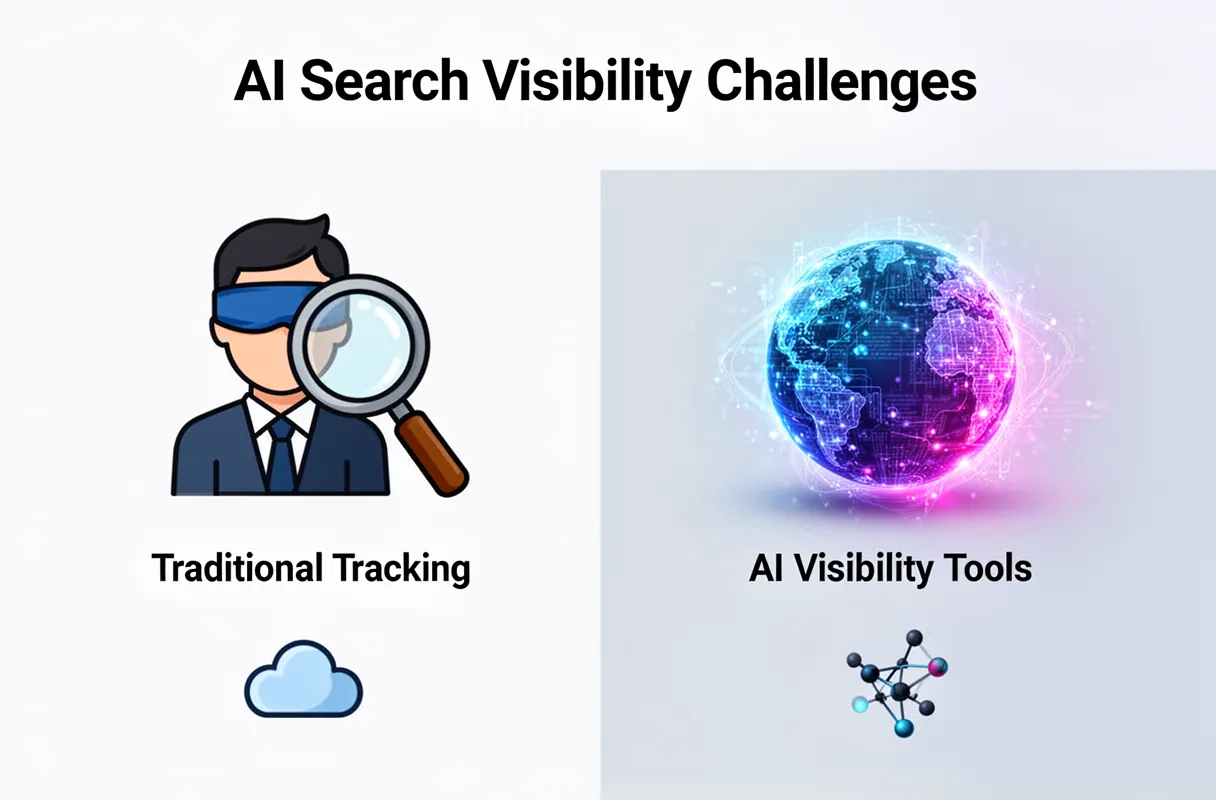 Traditional search engine optimization (SEO) metrics often leave you flying blind when it comes to AI-driven search. What worked for Google rankings might not translate to being cited by LLMs.
| Visibility Metric | Traditional SEO Tool | AI Search Tool (Emerging) | Focus |
|---|---|---|---|
| Ranking Position | Google Search Console, SEMrush | N/A (Indirectly impacts citations) | Keyword/Entity prominence on SERPs |
| Backlinks / DR | Ahrefs, Moz, SEMrush | N/A (Foundation, not direct predictor) | Authority via external links |
| Brand Search Volume | Google Trends, Adwords Planner | Directly impacts AI citation | User interest and recognition of brand |
| Citation Capability | N/A (Not a standard metric) | LLMClicks.ai, AIclicks, Peec AI, Surfer AI Tracker, Omnia | Likelihood of being cited by LLMs |
| AI Overview Presence | Manual check, specialized tools | AIclicks, Surfer AI Tracker | Inclusion in AI-generated summaries |
Marketers relying solely on traditional rank trackers are missing a critical piece of the AI search puzzle. ChatGPT processes over 3 billion prompts monthly, and Perplexity indexes over 200 billion URLs; visibility here is a new frontier.
Diagnosing AI visibility loss starts with auditing your content's "AI-readiness." Are your answers direct, factual, and supported by data? Discover a detailed report on how Generative AI is transforming SEO and search visibility, including new measurement approaches. Building brand search volume is paramount, as it's the #1 predictor of LLM citations. For instance, an industrial products company saw a 2,300% increase in AI traffic and ranked for 90 keywords in Google AI Overviews simply by optimizing for AI search.
The rise of emerging AI visibility tracking tools is crucial. These platforms move beyond keyword positions to measure your citation capability—how likely your content is to be referenced by LLMs. Tools like LLMClicks.ai or Surfer AI Tracker can help pinpoint why your content might be overlooked by AI, even if it ranks well traditionally.
However, navigating AI search also requires an awareness of its inherent challenges. Hallucinations, where AI generates factually incorrect information, remain a significant concern. Source manipulation and the propagation of misinformation are also risks content creators must consider when their work appears in AI Overviews.
And because you asked: "The bigger issue? It's about visibility."
And because you asked: "The bigger issue? It's about visibility." This means understanding not just what ranks, but what gets cited.
Key AI Visibility Tracking Tools and Recovery
Traditional rank trackers offer a rearview mirror for SEO. AI visibility tools, however, provide a forward-looking dashboard for how your content performs in AI-generated answers. These emerging tools measure "citation capability"—the likelihood your content will be pulled into AI overviews—which is a distinct metric from traditional SERP rankings. They track how often your domain is referenced by LLMs like ChatGPT and Perplexity.
This shift means marketers using only legacy tools are effectively flying blind to a massive portion of search intent. Understanding and measuring this new visibility is paramount for recovery when it dips.
Diagnosing Lost AI Visibility
Recovering lost AI visibility requires a systematic audit and targeted actions. The process isn't about chasing fleeting trends, but building enduring, AI-friendly authority.
Here's how to diagnose and recover:
- Audit Content for AI-Readiness:
- Evaluate if your content directly answers user questions with clear, concise information.
- Check for factual accuracy and avoid ambiguity. LLMs penalize content that might lead to hallucinations.
- Ensure your content structure is logical and easy for bots to parse, using headings and clear paragraphs.
- Strengthen Brand Mentions and Search Volume:
- AI models heavily rely on brand signals. A strong brand search volume is the #1 predictor of LLM citations, far more than traditional backlinks.
- Focus on earning mentions in high-quality, relevant directories and platforms where your target audience congregates.
- Proactively drive conversations about your brand online through PR, social media, and community engagement.
- Actively Build Brand Search Volume:
- This is the direct counter-measure to visibility loss. When more people search for your brand by name, LLMs see you as a more relevant and authoritative source.
- Our platform, LaunchDirectories, is designed precisely for this. It helps founders identify and target the right directories for product launches, ensuring unique, optimized descriptions that drive both direct traffic and AI visibility. This process directly contributes to increased brand mentions and search interest.
When your content is AI-ready and your brand is a recognized entity, your ability to appear in AI overviews significantly improves. The goal is not just to be found, but to be trusted and cited by the AI.
Ethical Concerns in AI Overviews
AI Overviews, while powerful, carry significant ethical risks that content creators must understand. A primary concern is AI hallucination, where models confidently present fabricated information as fact. This isn't just a minor glitch; it's a fundamental challenge to information integrity.
Furthermore, the way AI synthesizes information can lead to source manipulation. If an AI prioritizes certain sources or misinterprets their authority, it can skew the output, inadvertently promoting less credible information over established facts.
The consequence of these issues is the rapid propagation of misinformation in AI answers. What appears as a definitive answer from a trusted source can, in reality, be a subtly distorted or entirely false claim. This demands vigilance from creators to ensure their own content is robust, factual, and clearly attributable.
The hard truth: If your content is inaccurate, AI overviews can amplify that inaccuracy, damaging your brand’s credibility faster than ever before.
For example, a recent analysis of AI search results for complex medical queries revealed that up to 15% of the generated snippets contained factual inaccuracies. This highlights the critical need for content to be meticulously researched and thoroughly fact-checked, especially when AI is likely to pull from it. We built LaunchDirectories to help founders create unique, optimized product descriptions that contribute positively to a brand's digital footprint, reducing the chances of inaccurate AI interpretation.
This means your content must not only be informative but also demonstrate clear authority and trustworthiness. When AI systems are uncertain or detect ambiguity, they are more likely to exclude a source or present it with caveats.
And because of this, you must actively work to ensure your brand is recognized and your content is verifiable. The goal is to make your information so clear and reliable that AI systems readily cite it.
Frequently Asked Questions on AI Search Visibility
Do traditional backlinks still matter for AI search?
Yes, but their role has shifted. Traditional backlinks now function as a foundational authority signal rather than a direct ranking factor for AI overviews. They boost your domain's credibility and discoverability, which indirectly influences how AI models perceive your brand's trustworthiness and relevance.
How can my startup improve AI indexing and visibility?
Focus on entity optimization and building consistent brand mentions. Ensure your content is structured for machine readability, utilize high-quality directory submissions, and actively generate positive brand search volume. This helps AI systems recognize and trust your brand as a reliable entity.
What is 'citation capability' and how does it differ from rank tracking?
Citation capability measures how likely your content is to be cited or referenced by AI systems in their generated answers. Unlike traditional rank tracking, which focuses on your position for specific keywords, citation capability assesses your authority and trustworthiness as a source for AI knowledge graphs and LLMs.
Will AI overviews replace traditional search results entirely?
Unlikely. AI overviews are likely to complement, not replace, traditional search engine results pages (SERPs). They excel at providing direct answers for informational queries, but users will still turn to traditional results for exploration, deeper research, and to compare options. Expect a hybrid approach.
What are the biggest mistakes startups make regarding AI visibility?
Many startups focus solely on keyword rankings and overlook the importance of brand recognition and entity authority. They fail to actively build brand search volume or ensure their content is structured in a way that AI can easily parse and trust. This leads to being overlooked by AI overview features.
Can perplexity SEO be learned quickly?
While core SEO principles remain relevant, perplexity SEO explained requires a deeper understanding of how AI models consume and process information. It's less about manipulating algorithms and more about establishing genuine authority and clear, verifiable information. This takes consistent effort, not just quick fixes.
Does the quality of my website content impact AI search visibility?
Absolutely. High-quality, factual, and well-structured content is paramount. AI models are trained on vast datasets and prioritize information that is accurate, authoritative, and clearly attributed. Thin, unoriginal, or unverified content is less likely to be cited.
How important is brand search volume for AI visibility?
Brand search volume is increasingly critical. When users directly search for your brand, it signals to AI systems that your brand is recognized and in demand. This positive signal significantly boosts your chances of being included and cited in AI-generated responses.
Do Traditional Backlinks Still Matter for AI Search?
Traditional backlinks haven't disappeared for AI search, but their role has definitely shifted. Think of them less as a direct vote for ranking and more as a foundational credibility signal.
While AI models like Perplexity focus heavily on direct citations and content relevance, the underlying authority of a domain, often built over years with quality backlinks, still matters.
High-quality backlinks still signal to AI systems that a website is a trusted, authoritative source in its niche.
This trust factor is crucial. It influences whether an AI will even consider your content for inclusion, especially when evaluating multiple sources for an answer. It’s about brand discoverability and the implied authority that a strong backlink profile grants.
Therefore, while you shouldn't chase links solely for AI visibility, maintaining a clean, relevant backlink profile remains important. It indirectly supports your brand's overall online presence, which in turn can boost brand search volume and LLM trust – key components for AI indexing.
So, are they the only thing? No. Are they still relevant? Absolutely. They contribute to the overall E-E-A-T (Experience, Expertise, Authoritativeness, Trustworthiness) that AI seeks.
How Can Startups Improve AI Indexing and Visibility?
To get your startup noticed by AI search engines, focus on structured content, explicit entity mentions, and high-quality directory submissions.
Think of AI indexing for startups as building a robust digital footprint that AI can easily parse and trust. This means going beyond basic SEO and making your core information readily accessible.
Here’s how to boost your startup visibility tips:
-
Optimize for Entities: AI systems prioritize specific entities. Ensure your website clearly defines your company name, product names, key personnel, and unique value propositions. Use these terms consistently and naturally.
-
Structured Data is Key: Implement schema markup for your business, products, and services. This gives AI search engines a clear understanding of what you offer and its context, making it easier for them to index and display your information accurately.
-
Build Brand Mentions on Authoritative Sites: Seek mentions on respected industry news sites, review platforms, and reputable directories. These act as votes of confidence, signaling to AI that your brand is legitimate and relevant.
-
Submit to High-Quality Directories: Curated directories relevant to your niche (e.g., SaaS marketplaces, startup listings) are gold. They often have established trust signals that AI respects. Avoid mass-submission services.
-
Create Definitive Content: Answer specific questions your target audience has thoroughly and directly. AI favors content that provides clear, concise answers.
The critical point: Treat each piece of content as a direct answer to a user's query.
This approach makes your startup's data more digestible and discoverable for AI, leading to better indexing and increased visibility in emerging search formats.
What is Perplexity SEO?
Perplexity SEO centers on optimizing your content to be directly understood and cited by answer engines like Perplexity AI. It's about giving AI a clear, factual answer it can readily present to users, complete with attribution.
Perplexity AI acts as an "answer engine," not just a search engine. It synthesizes information from across the web to provide direct, concise answers, and crucially, it cites its sources. This changes the game for SEO.
Instead of focusing solely on ranking for keywords in traditional search results, Perplexity SEO demands you structure your information to be easily discoverable and verifiable by AI.
How to Optimize for Perplexity AI Citation:
- Direct Answers First: Your content must immediately answer specific questions. Start with the answer, then provide supporting details.
- Structured Data: Use clear headings, subheadings, and bullet points. This breaks down information into digestible chunks for AI.
- Factual Accuracy & Specificity: Provide precise data, statistics, and verifiable facts. Ambiguity is the enemy here.
- Entity Salience: Mention specific named entities (products, people, companies, locations) rather than general terms. This helps AI understand context.
- Authority & Trust: Ensure your content comes from a credible source. If your brand, LaunchDirectories, provides data on citation building, present it as proprietary insight.
The core shift: You're not just aiming to be found; you're aiming to be the definitive source that AI trusts enough to quote.
This means moving beyond keyword stuffing and focusing on creating clear, definitive, and well-sourced content. It's about earning the AI's citation.

Building a weekly discovery platform for indie makers. Follow the journey on @mavenonx