
8 Best Places to Sell Your SaaS Business in 2026
You've built a SaaS product, found product-market fit, and now you're ready to move on. Maybe you want to fund your next project, cash out, or simply hand it off to someone who can take it further. The question is: where do you list it?
The SaaS acquisition market has exploded in recent years. There are now dedicated marketplaces, community-driven platforms, and everything in between. Each platform has different buyer pools, fee structures, and sweet spots. Listing on the wrong one can mean months of silence. Listing on the right one can mean a closed deal in weeks.
We compared the 8 best platforms for selling a SaaS business — from dedicated acquisition marketplaces like Acquire.com to free community channels like Reddit. Here's what you need to know.
Quick Comparison: All 8 Platforms
| # | Platform | Best For | Buyers | Seller Cost |
|---|---|---|---|---|
| 1 | Acquire.com | Overall best | 500K+ buyers | Free for sellers. Buyers pay annual subscription to access listings. |
| 2 | TrustMRR | Verified revenue | 842+ verified startups | Free listing. Paid boosts: Starter ($29), Growth ($199), Scale ($999). |
| 3 | Microns.io | Micro-exits under $100K | Growing indie community | Free for sellers. Premium buyer membership: $49/mo or $199/year. |
| 4 | Flippa | Maximum exposure | 1.5M+ users | Listing from $29. Success fee: 3–10% based on sale price. |
| 5 | BuySellStartups | Free, zero commission | 10K+ buyers & investors | Free — 0% commission for buyers and sellers. |
| 6 | IndieMaker | Side projects | Growing indie maker community | Free to list. Premium buyer subscription available. |
| 7 | SideProjectors | Free directory | Active developer community | Free |
| 8 | Reddit Communities | Community-driven | 2M+ across subreddits | Free |
1. Acquire.com— Overall best
Buyers
500K+ buyers
Best For
Overall best
Seller Cost
Free for sellers. Buyers pay annual subscription to access listings.
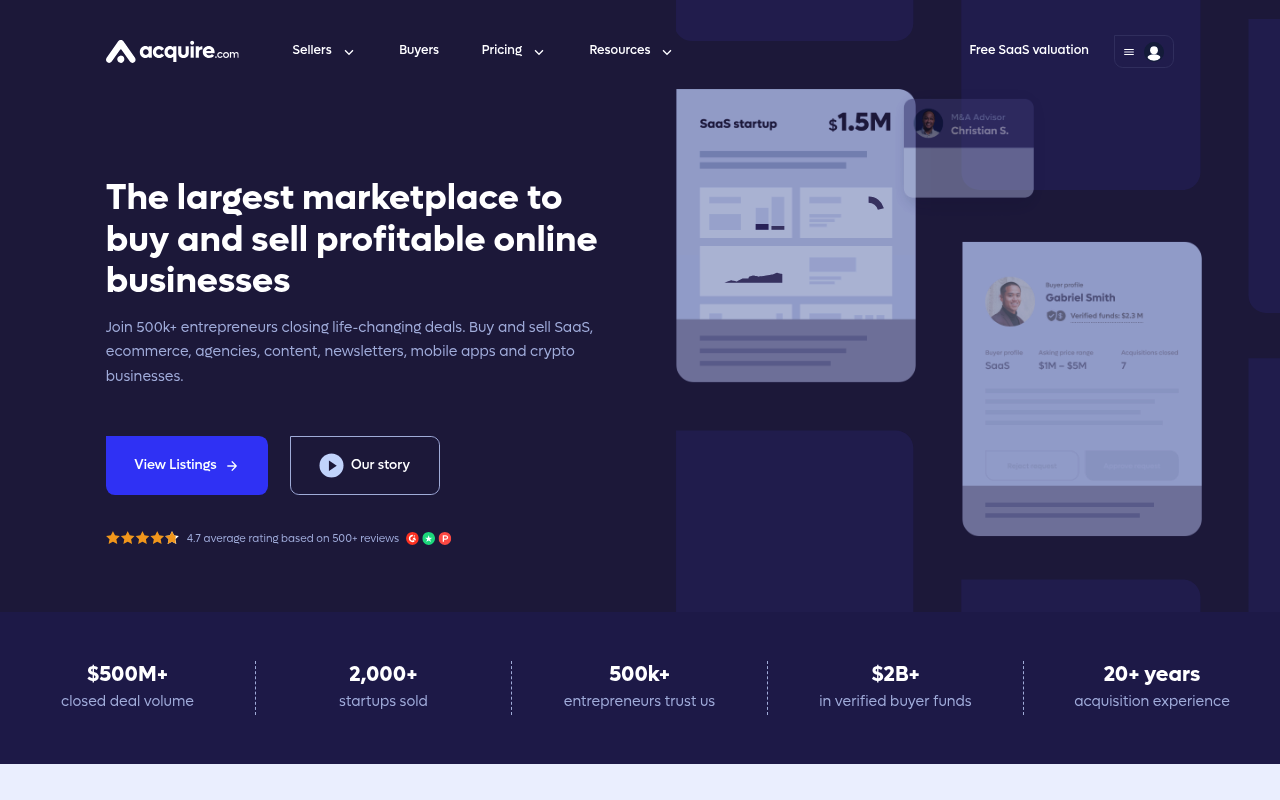
Acquire.com (formerly MicroAcquire) is the gold standard for SaaS acquisitions. Founded by Andrew Gazdecki in 2020, it has facilitated thousands of startup acquisitions and built the largest pool of vetted buyers in the space.
The platform handles the entire deal lifecycle — from creating your listing and generating NDAs to managing LOIs and coordinating closing. Sellers connect their Stripe or payment processor to verify revenue, which gives buyers confidence and speeds up due diligence.
Acquire.com is free for sellers with no listing fees and no success fees. The platform monetizes through buyer subscriptions, which means the incentives are aligned: they want to attract serious, funded buyers to keep sellers listing. Buyers pay an annual subscription to access listings, message sellers, and use deal management tools.
The quality of buyers on Acquire.com tends to be higher than on general marketplaces. Many are serial acquirers, PE firms, or funded entrepreneurs specifically looking for SaaS businesses. You'll get fewer tire-kickers and more serious offers.
Pros
- Largest buyer pool in the SaaS acquisition space (500K+ registered)
- Completely free for sellers — no listing fees, no commissions, no success fees
- Built-in NDA, LOI, and deal management tools streamline the process
- Revenue verification via Stripe/payment processor integration
- Vetted buyer profiles reduce low-quality inquiries
- Dedicated M&A advisors available for premium listings
Cons
- Competitive — hundreds of listings means yours needs to stand out
- Buyer subscription model means some smaller buyers can't access your listing
- Best suited for businesses with $1K+ MRR; very early-stage products get less traction
2. TrustMRR— Verified revenue
Buyers
842+ verified startups
Best For
Verified revenue
Seller Cost
Free listing. Paid boosts: Starter ($29), Growth ($199), Scale ($999).
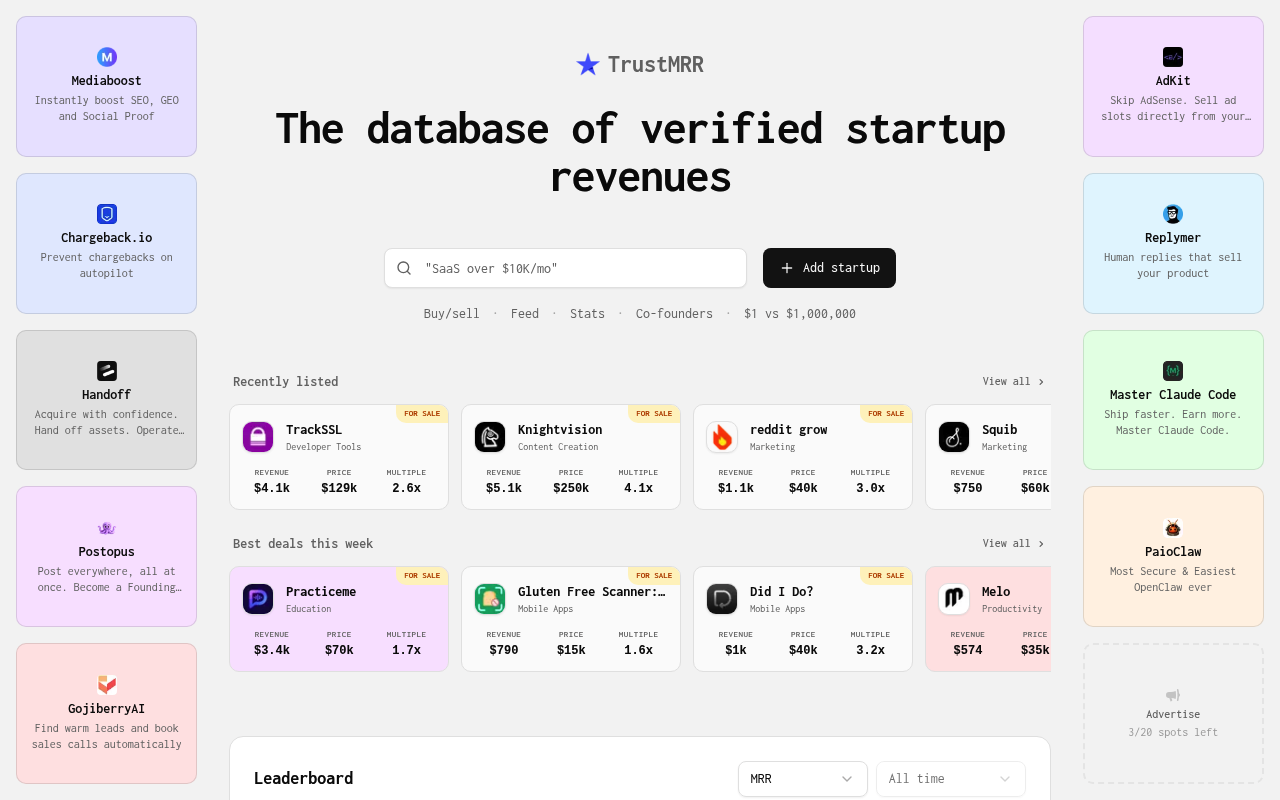
TrustMRR differentiates itself with a strict revenue verification process. Every SaaS listed on the platform goes through a verification step that confirms the business's MRR, making it one of the most trustworthy marketplaces for both buyers and sellers.
The verification process connects to your payment processor (Stripe, Paddle, etc.) and confirms that your reported revenue is accurate. This verified badge makes your listing significantly more attractive to buyers who are tired of inflated or unverifiable claims on other platforms.
TrustMRR offers a tiered boost system for sellers who want more visibility. The free tier gets your listing published, but paid boosts (Starter at $29, Growth at $199, Scale at $999) push your listing higher in search results, add it to email digests, and feature it on the homepage. For high-value SaaS businesses, the Scale tier often pays for itself with a faster sale.
The buyer community, while smaller than Acquire.com, tends to be highly qualified. These are people who specifically seek out verified-revenue businesses, meaning they're ready to buy — not just browsing.
Pros
- Revenue verification adds instant credibility to your listing
- Verified badge helps you stand out from unverified listings on other platforms
- Affordable boost tiers to control your visibility and marketing spend
- Focused marketplace — less noise than general business-for-sale sites
Cons
- Smaller buyer pool compared to Acquire.com or Flippa
- Verification process adds a few days before your listing goes live
- Boost pricing can add up if your SaaS takes time to sell
3. Microns.io— Micro-exits under $100K
Buyers
Growing indie community
Best For
Micro-exits under $100K
Seller Cost
Free for sellers. Premium buyer membership: $49/mo or $199/year.
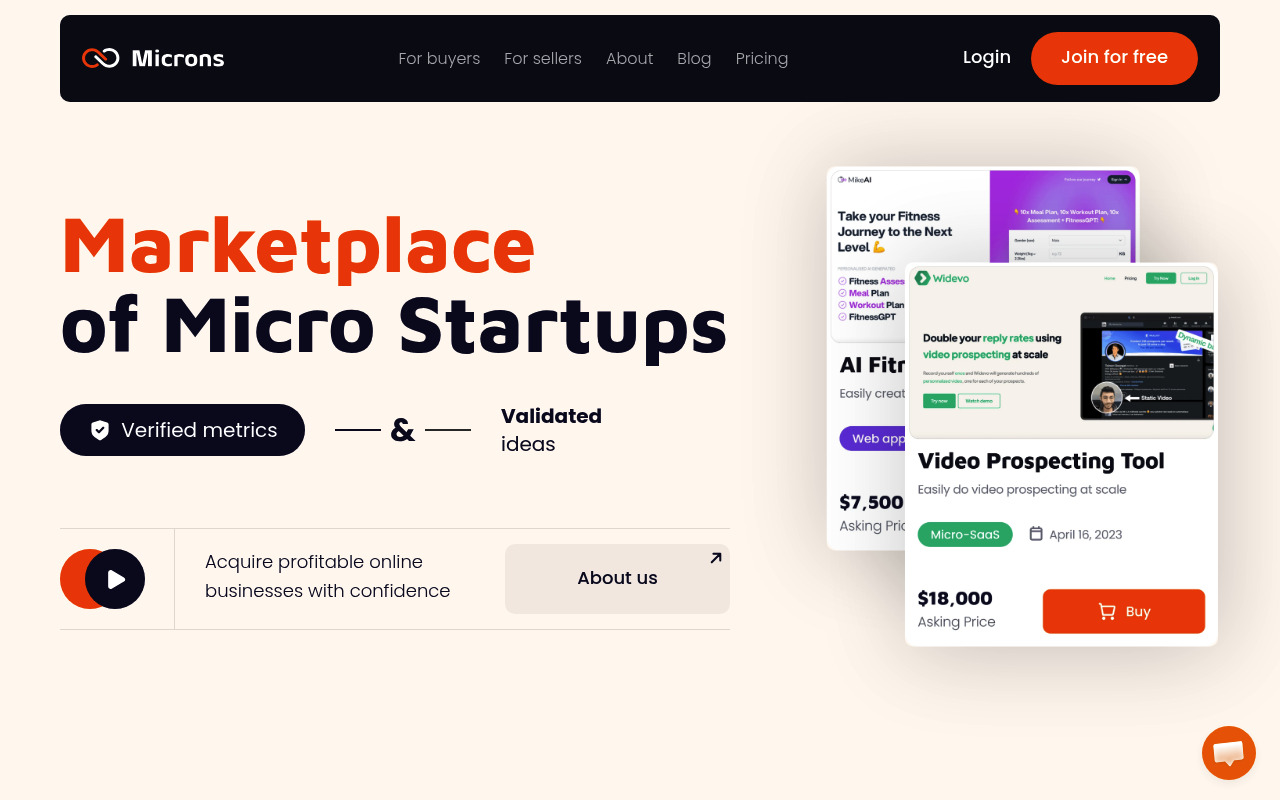
Microns.io is purpose-built for micro-acquisitions — the sweet spot of small SaaS products, side projects, and indie apps priced under $100K. If you've built a profitable side project and want a clean exit without the overhead of a traditional M&A process, Microns is where you go.
The platform is designed around the indie maker ecosystem. Listings are typically bootstrapped SaaS tools, browser extensions, mobile apps, and Shopify apps that generate anywhere from a few hundred to a few thousand dollars in MRR. The buyer community understands this niche and values lean, profitable businesses over venture-scale growth.
Selling on Microns is free — there are no listing fees and no commissions. The platform monetizes through premium buyer memberships ($49/mo or $199/year), which give buyers early access to new listings and advanced filtering. This model keeps the marketplace free for sellers while ensuring buyers are invested enough to make serious offers.
The listing process is simple and fast. You fill out a form with your business details, revenue, tech stack, and asking price. Microns reviews it, and once approved, it goes live to their buyer network. Expect to receive inquiries within days if your product is priced reasonably and has verified revenue.
Pros
- Purpose-built for small SaaS and side project exits (sub-$100K)
- Completely free for sellers — no fees, no commissions
- Active community of indie buyers who understand bootstrapped businesses
- Fast listing process with quick turnaround on approvals
- Good for products with lower MRR that don't fit premium acquisition platforms
Cons
- Not the right fit for larger SaaS businesses (>$100K valuations)
- Smaller buyer audience than Acquire.com or Flippa
- Less deal management tooling — communication is more manual
4. Flippa— Maximum exposure
Buyers
1.5M+ users
Best For
Maximum exposure
Seller Cost
Listing from $29. Success fee: 3–10% based on sale price.
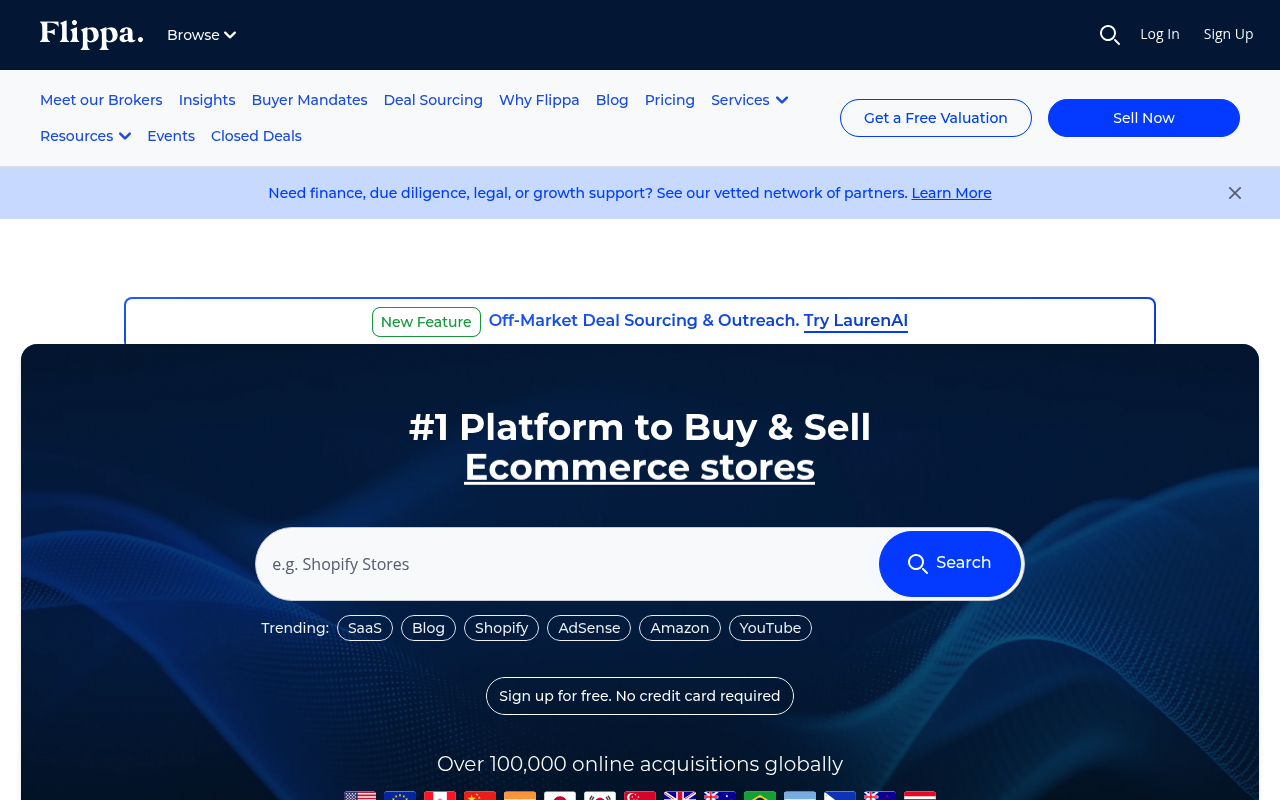
Flippa is the OG of online business marketplaces. Founded in 2009, it's one of the oldest and largest platforms for buying and selling websites, apps, and SaaS businesses. With 1.5M+ registered users, it offers unmatched exposure — but that volume comes with trade-offs.
Flippa supports multiple listing formats: fixed-price sales, auctions, and broker-assisted deals. Auctions can create urgency and competitive bidding, which sometimes drives the price above your asking price. Fixed-price listings work better for sellers who know their number and want to negotiate directly.
The platform charges listing fees starting at $29 (higher tiers get more visibility and features), plus a success fee of 3–10% based on the final sale price. For a $50K SaaS sale, you're looking at $1,500–$5,000 in fees. This is significant compared to free platforms like Acquire.com, but you're paying for the audience size.
The downside of Flippa's massive user base is noise. You'll get inquiries from tire-kickers, lowball offers, and people who aren't serious buyers. Budget time for filtering through messages. Flippa has added verification badges and due diligence tools to combat this, but the signal-to-noise ratio is still lower than SaaS-focused platforms.
Flippa works best when you invest in a premium listing with high-quality screenshots, detailed financials, and a compelling description. Generic listings get buried. Treat your Flippa listing like a landing page — it needs to sell the opportunity.
Pros
- Massive buyer pool — 1.5M+ registered users, the largest in the industry
- Supports auctions, fixed-price, and broker-assisted sale formats
- Strong brand recognition and search engine presence
- Built-in due diligence, escrow, and legal support for larger deals
- Covers all business types (domains, content sites, e-commerce, SaaS, apps)
Cons
- Success fees (3–10%) significantly cut into your sale proceeds
- Listing fees ($29+) charged regardless of whether your SaaS sells
- High volume of low-quality inquiries and lowball offers
- Your listing competes with thousands of other businesses across all categories
5. BuySellStartups— Free, zero commission
Buyers
10K+ buyers & investors
Best For
Free, zero commission
Seller Cost
Free — 0% commission for buyers and sellers.
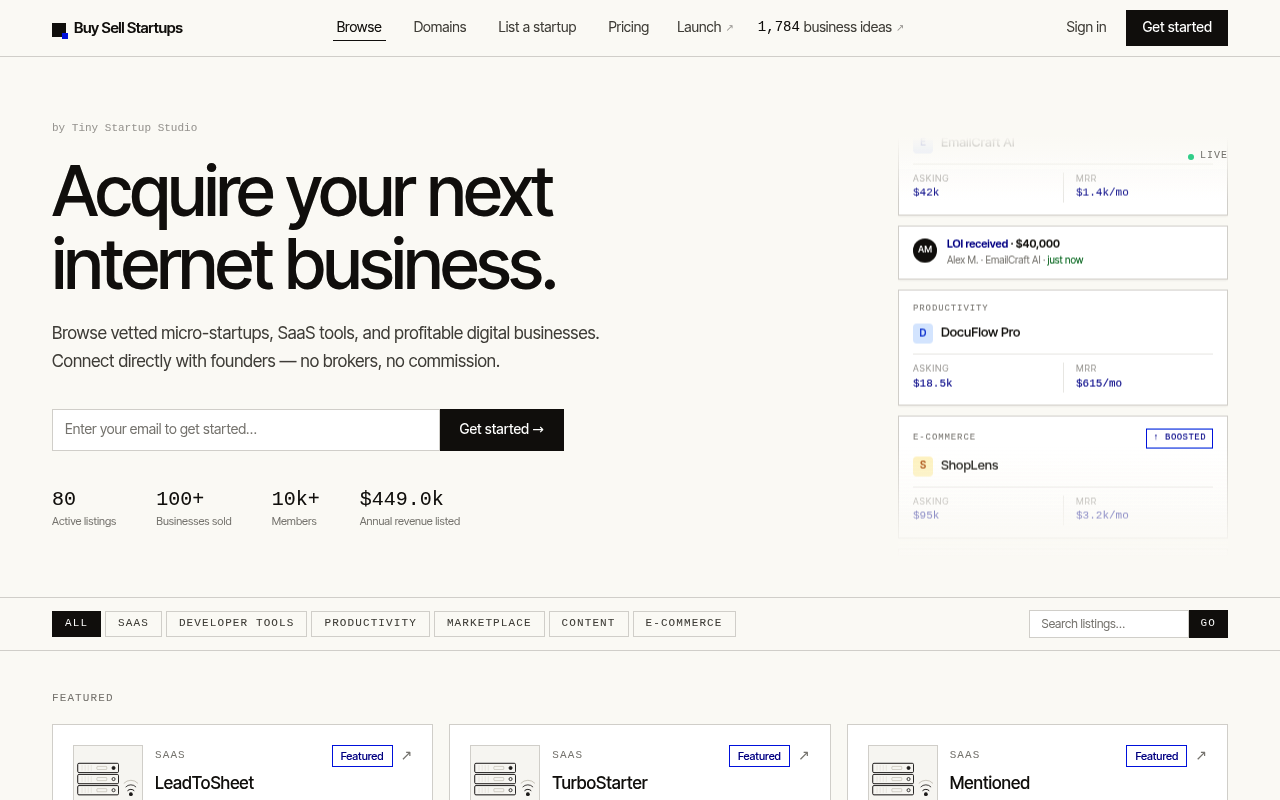
BuySellStartups is a fully free marketplace with zero commissions on either side. No listing fees, no success fees, no hidden charges. It's a straightforward platform where sellers list their startups and buyers reach out directly. If keeping 100% of your sale price is the priority, this is your platform.
The platform is simple by design. You create a listing with your business details, revenue data, asking price, and a description. Buyers browse listings and contact you directly. There's no intermediary managing the deal — you handle negotiations, due diligence, and closing yourself (or bring in a lawyer/broker separately).
The buyer pool is smaller than premium platforms (10K+ registered buyers and investors), but the zero-commission model attracts budget-conscious buyers who are serious about acquiring and often willing to move fast. Many are first-time acquirers or indie entrepreneurs looking for their first SaaS purchase.
BuySellStartups works well as a supplementary listing. Put your primary listing on Acquire.com or TrustMRR, and cross-list here for additional exposure at zero cost. There's no exclusivity requirement, so you lose nothing by listing on multiple platforms simultaneously.
Pros
- Completely free — zero listing fees, zero commissions, zero hidden costs
- Keep 100% of your sale price
- Direct buyer-seller communication without intermediaries
- Simple listing process — get listed in minutes
- Good as a supplementary listing alongside premium platforms
Cons
- Smaller buyer pool (10K+) compared to Acquire.com or Flippa
- No deal management tools — negotiations and closing are DIY
- No revenue verification or buyer vetting features
- Less brand recognition in the SaaS acquisition space
6. IndieMaker— Side projects
Buyers
Growing indie maker community
Best For
Side projects
Seller Cost
Free to list. Premium buyer subscription available.
IndieMaker is a marketplace built by and for the indie maker community. It's the natural home for selling bootstrapped SaaS tools, side projects, browser extensions, and small apps to buyers who understand and value the indie ecosystem.
The community-driven approach is IndieMaker's strength. Buyers on this platform aren't looking for venture-scale businesses — they want profitable, manageable products they can run independently. This makes it ideal for lifestyle businesses, weekend projects that have found product-market fit, and tools that generate modest but consistent revenue.
Listing is free, and the process is tailored for indie products. You share your product story, tech stack, revenue, and growth trajectory. The community aspect means buyers often engage in public discussions about listings, which can validate your product's value and create social proof.
IndieMaker also functions as a discovery platform for new products, which means your listing gets exposure beyond just acquisition-focused buyers. Makers browsing for inspiration might decide they'd rather buy than build, turning a browser into a buyer.
Pros
- Community of buyers who understand and value indie/bootstrapped products
- Free to list — no fees or commissions
- Buyers are typically indie makers who know how to run and grow small products
- Community discussions around listings create social proof
- Double duty as a product directory — exposure beyond just buyers
Cons
- Smaller audience — better for niche or indie-focused products
- Less structured deal process compared to dedicated acquisition platforms
- Not the right fit for larger SaaS businesses or enterprise products
7. SideProjectors— Free directory
Buyers
Active developer community
Best For
Free directory
Seller Cost
Free
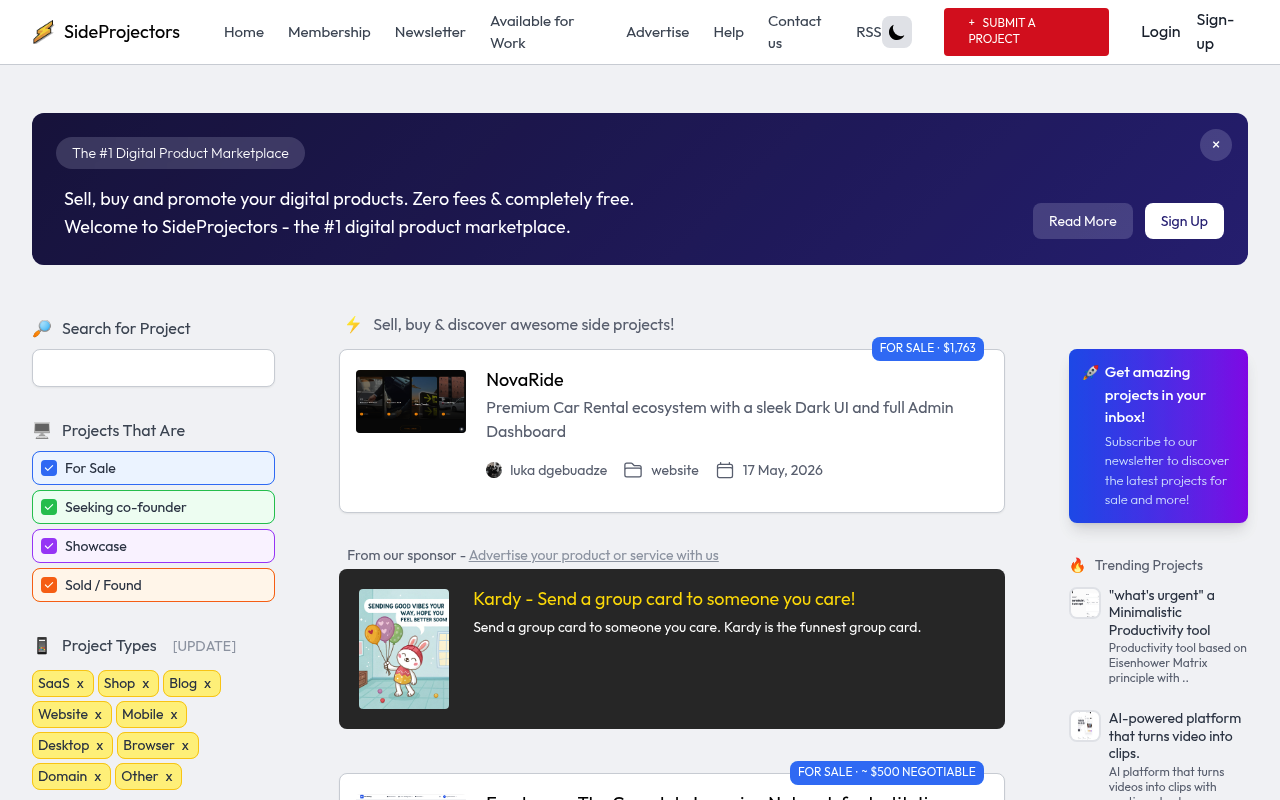
SideProjectors is a free, community-driven marketplace specifically for side projects. Developers and makers list projects they've built but can no longer maintain, and buyers browse for projects to acquire, grow, or learn from. It's casual, transparent, and completely free.
SideProjectors occupies a unique niche: it's where developers go when they have a side project with some traction but don't have time to maintain it. Many listings are pre-revenue or low-revenue, making it the right platform for projects that aren't yet big enough for Acquire.com or Microns.io but still have real value (users, code, domain, traffic).
The platform is entirely free — no listing fees, no commissions, no premium tiers. This makes it zero-risk for sellers. You list your project with a description, tech stack, and asking price, and interested buyers reach out through the platform's messaging system.
Because SideProjectors caters to a developer audience, listings tend to be technically detailed. Buyers expect to see the tech stack, hosting setup, and codebase quality described clearly. If your project is well-built and well-documented, it'll stand out. If it's a mess, buyers will pass.
Pros
- Completely free — no listing fees, no commissions, no hidden costs
- Active developer community that understands technical products
- Low friction — create a listing in minutes with minimal bureaucracy
- Good for pre-revenue or low-revenue projects that don't fit premium platforms
- Transparent marketplace with public discussions on listings
Cons
- Mostly smaller projects with lower price points (under $10K typical)
- No built-in deal management, escrow, or legal support
- Limited buyer vetting — anyone can message you
- Less suited for established SaaS with significant revenue
8. Reddit Communities— Community-driven
Buyers
2M+ across subreddits
Best For
Community-driven
Seller Cost
Free
Reddit isn't a marketplace, but it's where a surprising number of SaaS acquisitions start. Active subreddits like r/SaaS, r/SideProject, r/Startups, and r/EntrepreneurRideAlong have millions of members, many of whom are actively looking to buy projects or invest in early-stage businesses.
The key to selling on Reddit is authenticity. Write a genuine post about why you're selling, what the product does, its metrics, and what you're looking for. "I built X, it makes $Y/mo, I'm moving on and looking for someone to take it over" performs infinitely better than a polished sales pitch. Redditors value transparency and will ask hard questions — be ready for them.
The best subreddits for SaaS sales are r/SideProject (580K+ members), r/Startups (1.2M+ members), r/SaaS (120K+ members), r/EntrepreneurRideAlong (250K+ members), and r/MicroSaaS (growing community). Each has different norms and expectations, so lurk before posting and follow community rules. A well-received post can get thousands of views and dozens of serious DMs.
Reddit's biggest advantage is the community feedback loop. Even if you don't find a buyer immediately, the comments section will give you honest feedback on your pricing, positioning, and product. This can help you refine your listing before posting on dedicated marketplaces.
The downside is that Reddit offers zero deal infrastructure. There's no escrow, no NDA system, no verification. You're responsible for vetting buyers, negotiating terms, and handling the legal side. Use Reddit to find interested buyers, then move the conversation to email and bring in a lawyer for the actual transaction.
Pros
- Massive, engaged audience — 2M+ members across relevant subreddits
- Completely free to post
- Community feedback helps you refine your pitch and pricing
- Authentic, trust-based interactions (no corporate middleman)
- Posts can go viral and reach thousands of potential buyers organically
Cons
- No deal infrastructure — no escrow, NDA management, or legal support
- Posts can get buried quickly without upvotes or engagement
- No buyer verification — anyone can DM you
- Each subreddit has its own posting rules; violating them gets you banned
- Not a marketplace — treat it as a lead generation channel, not a sales platform
Best Subreddits for Selling SaaS
- r/SideProject — 580K+ members
- r/Startups — 1.2M+ members
- r/SaaS — 120K+ members
- r/EntrepreneurRideAlong — 250K+ members
- r/MicroSaaS — Growing community
How to Choose the Right Platform
The best platform depends on your product size, revenue, and how hands-on you want the process to be. Here's a quick decision framework:
If your SaaS does $1K+ MRR
Start with Acquire.com. It has the largest buyer pool and the most robust deal infrastructure. Cross-list on TrustMRR for the verified revenue badge — it adds credibility and attracts buyers who value transparency.
If you're selling a side project under $100K
Microns.io and IndieMaker are your best bets. Both cater to the indie maker ecosystem and have buyers who appreciate small, profitable products. Add SideProjectors for extra exposure — it's free.
If you want maximum exposure
Flippa has 1.5M+ users. You'll pay for it (listing fees + success fees), but the sheer volume of eyeballs is unmatched. Combine it with a Reddit post for organic reach.
If you want to spend $0
List on Acquire.com (free for sellers), BuySellStartups (zero commission), SideProjectors (free), and post on Reddit. You can reach hundreds of thousands of potential buyers without spending a dollar.
Tips for Selling Your SaaS Successfully
1. Get your metrics in order before listing
Buyers will ask for MRR, churn rate, LTV, CAC, and growth trends. Have these ready in a clean dashboard or spreadsheet before you list. Connect your Stripe or payment processor for verified revenue data. Sellers who can instantly share accurate metrics close deals faster and at higher multiples.
2. List on multiple platforms simultaneously
There's no exclusivity requirement on most platforms. List on Acquire.com for its buyer network, TrustMRR for credibility, Microns for the indie crowd, and post on Reddit for organic interest. More platforms = more visibility = more offers = better negotiating position.
3. Prepare documentation and a handoff plan
Serious buyers want to see a tech stack overview, deployment documentation, a list of third-party services and API keys, and a clear handoff timeline. Having a "buyer onboarding" document ready shows professionalism and dramatically speeds up due diligence. Include hosting costs, key dependencies, and any known technical debt.
4. Set a realistic asking price
Most SaaS businesses sell for 3–5x annual revenue (or 36–60x MRR). Factors that increase your multiple: low churn, strong growth, diversified revenue, clean code, and minimal owner dependence. Factors that decrease it: high churn, flat or declining growth, technical debt, and being the sole operator with no documentation.
5. Don't neglect the product while selling
The sale process can take weeks or months. During that time, keep shipping updates, responding to customers, and maintaining your metrics. Nothing kills a deal faster than MRR dropping during due diligence because you checked out early.
6. Use an escrow service for the transaction
For transactions over a few thousand dollars, always use an escrow service like Escrow.com or the built-in escrow on platforms that offer it. This protects both parties and ensures the funds are secure before you transfer assets.
What Buyers Actually Look For
Understanding buyer psychology helps you position your listing for a faster sale at a better price. Here's what matters most:
- Verified, stable revenue: Consistent MRR with low churn is the #1 signal. Buyers want predictable cash flow, not spiky one-time sales.
- Growth potential: Buyers pay more for businesses with clear, untapped growth channels — SEO keywords you haven't targeted, markets you haven't entered, features users have requested.
- Low owner dependence: If the business runs without you, it's worth more. Documented processes, automated workflows, and a clean codebase signal that a new owner can step in without friction.
- Clean tech stack: Buyers prefer standard, well-known technologies (React, Node.js, PostgreSQL, etc.) over obscure frameworks. Good test coverage, CI/CD, and deployment docs reduce perceived risk.
- Diversified customer base: If 80% of your revenue comes from one customer, that's a risk. Buyers prefer a broad base of smaller customers over concentration risk.
Related Guides
Building your next SaaS after an exit? Launch it on TinyLaunchpad to get early traction, visibility, and dofollow backlinks for SEO.