LaunchDirectories: Submit Your Startup to 100+ Directories Automatically
Discover how LaunchDirectories helps founders submit products to 100+ launch directories, build quality backlinks, and boost startup visibility. Done-for-you directory submission service for SaaS, AI tools & startups.
When you launch a new product, you face a familiar problem. You've built something good. You want people to find it. So you start submitting to directories. Product Hunt, TinyLaunchpad, IndieHackers, BetaList, Hacker News, and dozens more. Each one has a different form. Different requirements. Different image sizes. Some want taglines. Some want full descriptions. Some need pricing info upfront. Others ask for a launch date. After submitting to fifteen directories, you realize you've spent six hours on repetitive work that isn't moving your product forward.
This is the problem that LaunchDirectories solves, and it's worth understanding because the stakes are real. Launching isn't just about getting eyeballs. It's about building authority, getting quality backlinks, and establishing your startup's presence across the web simultaneously. Do it right, and you get referred traffic, SEO juice, and credibility with investors. Do it haphazardly, and you waste time for minimal return.
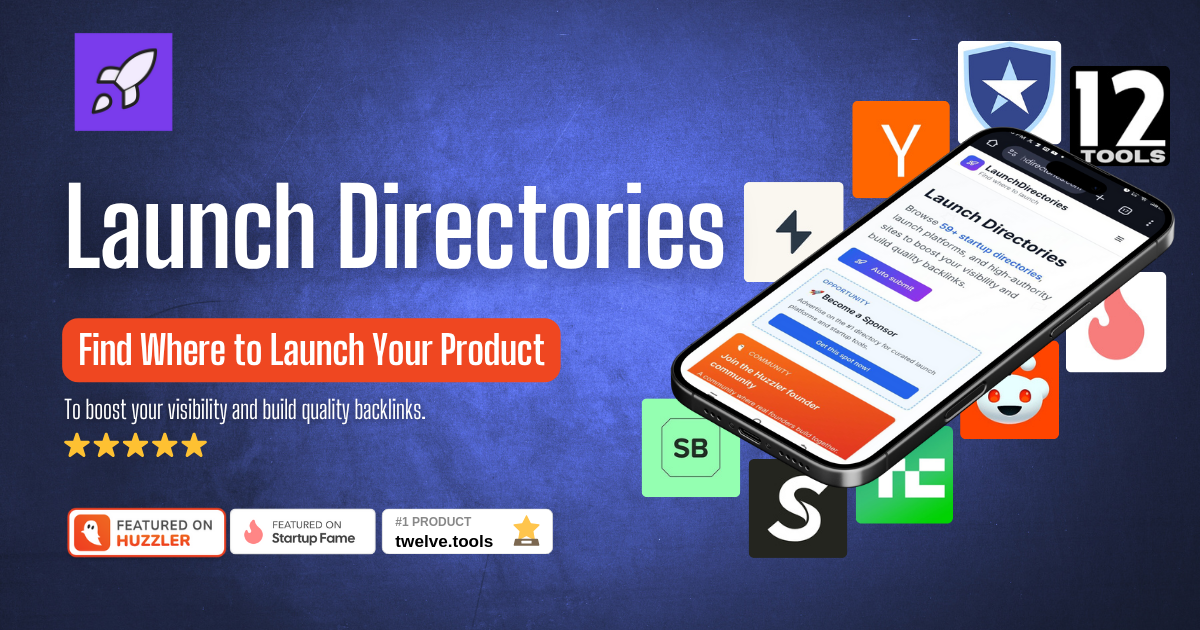
LaunchDirectories is a curated database of over 100 startup directories and launch platforms, paired with an optional done-for-you submission service that handles the entire process for you. The core idea is simple: instead of manually finding and submitting to directories one by one, you submit once and let the service distribute your product to verified, high-value platforms automatically.
What Makes LaunchDirectories Different
Most founders discover directories ad hoc. They find Product Hunt and Hacker News easily. IndieHackers comes up in conversation. But there are hundreds of legitimate launch platforms most people never hear about. Some get thousands of monthly visitors. Others have Domain Ratings in the 70s and 80s, which means backlinks from those sites significantly improve your SEO rankings.
LaunchDirectories solves the discovery problem by maintaining a searchable database of every viable launch platform they can find, complete with real metrics. Each directory listing includes Domain Rating (DR), whether the link is dofollow or nofollow, estimated monthly traffic, pricing information, and when the data was last verified.
This is crucial. A nofollow link from a high-traffic site still drives referral traffic and builds brand awareness, but it won't improve your search rankings. A dofollow link from a mid-traffic directory might be worth more than a nofollow link from a massive platform if your goal is SEO-focused. LaunchDirectories lets you make informed decisions based on your specific goals.
The founder, Krzysztof, spent months researching these directories before building the platform. He tested which ones actually drive qualified traffic, which are dead weight, and which have staying power. That research is baked into the database.
The Submission Service: What It Actually Does
Beyond the directory database, LaunchDirectories offers a manual submission service called "Auto Submit." The name is slightly misleading because it's not actually automatic. Instead, a human submits your product to 100+ directories on your behalf. It's considered one of the best directory submission services available for founders who want done-for-you management.
Here's how it works. You provide your product details once: name, URL, tagline, description, logo, screenshots, pricing, and any other relevant information. LaunchDirectories' team takes that information and submits your product to every relevant directory in their database. They handle all the form-filling, all the image resizing, all the description tailoring. You don't touch a single submission form.
The value here goes beyond time savings, though that's real. When you submit to 100+ directories personally, submission quality suffers. You get tired. You start copying and pasting descriptions without tailoring them. Submissions get sloppy. When someone else handles it, they maintain consistency and follow each platform's specific guidelines. That consistency translates to better visibility across all platforms and more uniform messaging about your product.
The service also matters for timing. Most directories have submission queues. Some take days to list new products. Some verify submissions manually before publishing. If you space out your submissions over weeks, you lose the momentum that comes from multiple platforms highlighting your product in the same window. A concentrated submission blitz, handled by someone familiar with each platform's workflow, amplifies your launch's impact.
Who Benefits Most From This Service
The audience here divides into two groups. First are bootstrapped founders and solo makers who genuinely don't have time to submit to 50+ directories. A developer who just launched a SaaS tool has code to maintain and users to support. Spending ten hours on directory submissions is ten hours not spent on product work. At that point, the service pays for itself in time value alone. If you're launching a SaaS specifically, complete SaaS promotion guides can help you think through the full distribution strategy beyond directories.
Second are agencies and marketers who handle product launches as part of a larger service offering. They might manage backlink strategy, content marketing, and paid campaigns for their clients. Directory submissions fit naturally into that workflow, and offloading it to specialists frees them to focus on bigger-picture strategy. They can offer directory submission as a value-add to clients without building in-house expertise.
There's a third group worth mentioning: founders doing their second or third launch. They've learned that good distribution matters. They know which directories moved the needle last time and which were noise. They want to be smarter this time but don't have more time than they did before. For them, the service is about optimization, not just convenience.
The SEO Angle: Why Backlinks From Directories Matter
If you've done any reading about SEO, you know backlinks are currency. They signal to search engines that your site is trustworthy and authoritative. But not all backlinks are created equal. A link from a spammy, low-authority site doesn't help. A link from a high-DR site helps significantly. A dofollow link passes more SEO juice than a nofollow link.

LaunchDirectories tracks all three variables. The database shows you exactly which directories offer dofollow links, which have high Domain Ratings, and which are worth your effort from an SEO perspective. Most startup directories in the database range from DR 30 to DR 90. Some hit 90+. Getting backlinks from multiple high-DR directories in a single launch creates a rapid boost to your site's authority.
This is especially valuable for new startups. SEO takes time. Getting five high-quality backlinks in your first week is a head start that might take months to build through other channels. These links don't replace content marketing or technical SEO, but they compress the timeline to getting search visibility.
The dofollow filter is important too. High-traffic directories that use nofollow links still matter for referral traffic and brand mentions, but they won't improve your search rankings. If SEO is your priority, you want to target the high-DR, dofollow directories specifically. LaunchDirectories lets you segment by both metrics.
How to Prepare for Directory Submissions
Whether you use LaunchDirectories' submission service or do it yourself, preparation matters. Most directories want roughly the same core information, but having it ready before you start saves enormous time and reduces inconsistency across platforms.
Start with a solid product tagline. This is usually 5-15 words that answer one question: what does this product do? "Automated web app security audits that find vulnerabilities before attackers" works. "A tool for managing things" doesn't. Your tagline should be specific enough to communicate actual value and short enough to fit in every directory's character limits.
Next, write a 150-200 word description. This should emphasize benefits over features, address a specific pain point, and include a clear call to action. Different directories have different word limits, so writing to 150-200 words gives you flexibility to trim for shorter platforms or expand if needed. Avoid marketing language. Avoid jargon that requires explanation. Write the description you'd use explaining your product to a smart person who's never heard of it before.
Prepare a logo in high resolution, preferably as a transparent PNG. Most directories want 200x200px or larger. Prepare two to three screenshots that show your product in action. Avoid marketing materials. Show real screenshots of real use. Include pricing information if you charge money. If you offer a free tier, be clear about what's free and what costs money.
Gather any other relevant information. Founder names and Twitter handles if the directory tracks that. Social media links. A demo video link if you have one. Funding status if you're funded. These details vary by platform, but having them ready avoids last-minute scrambling.
Traffic vs SEO: Choosing Your Submission Strategy
Not all directory submissions are created equal. Some directories will send you real traffic. Some matter almost entirely for SEO backlinks. Understanding the difference helps you set realistic expectations.
Product Hunt and TinyLaunchpad send meaningful traffic during your launch week. Hundreds or thousands of people browse these platforms looking for new tools. If your target audience skews heavily toward makers and indie hackers, the traffic here converts well. A top listing on Product Hunt can mean thousands of visitors in a day. If you're looking to explore alternatives beyond Product Hunt, Product Hunt alternatives and discovery platforms like Toolfio offer additional reach to your target audience.
Lower-traffic directories, even if they have high Domain Ratings, might send dozens of visitors or fewer. But the backlink from a DR 75 site matters for SEO regardless of how much traffic it sends. You're not submitting there for clicks. You're submitting for search engine authority.
Smart strategy combines both. Focus your effort and craft tailored submissions for high-traffic directories where your audience hangs out. Use the broader submission service for the medium and low-traffic directories where the backlinks matter more than direct traffic. LaunchDirectories helps here by sorting directories by traffic so you know what to expect.
Realistic Expectations and What to Track
A common mistake is treating a directory submission launch like a conversion funnel where everything flows upward. It doesn't work that way. Of the 100+ directories you submit to, maybe 20-30 will send meaningful referral traffic in the first month. Another 50-60 will list your product but send minimal clicks. The value accumulates elsewhere: in the backlinks, in the search rankings that improve over time, in the brand mentions and SEO signals that help future marketing efforts.
Track the right metrics. Set up UTM parameters for each directory link so you can measure exactly how much traffic comes from each source. Track conversions, not just traffic. You might get 100 visitors from one directory and five from another, but if the five convert at 20% and the hundred converts at 2%, you've learned something important about where your real audience hangs out.
The SEO value takes longer to appear. Domain Rating improves gradually, not overnight. You might not see meaningful search ranking improvements for 6-12 weeks after your submission blitz. But they come. This is the compound effect of backlinks.
Comparison: Manual vs Service Submission
If you're considering the LaunchDirectories submission service versus doing it yourself, here's the honest comparison.
Manual submission costs you time. A lot of time. Expect 10-15 hours if you're careful and consistent. Maybe 20 hours if you're learning as you go. That time has value. For most founders, paying someone else to handle it makes financial sense.
Service submission costs money. LaunchDirectories pricing ranges depending on scope, but you're paying to have humans do the work. This is worth it if your time is genuinely better spent on product, marketing, or sales. It's probably not worth it if you have three free hours and want to submit to twenty directories just to say you did.
Service submission also ensures consistency. When someone who does 50 directory submissions a month handles yours, they've optimized the process. They know which directories are finicky about image sizes. They know which ones take longer to approve. They know how to write descriptions that work within each platform's specific culture and audience expectations.
The trade-off is control. You're not personally shepherding every submission. If you care deeply about the exact wording on a specific platform, manual submission gives you that precision. Most founders don't care that much. They want their product listed, formatted correctly, and moving on.
The Directory Landscape Keeps Changing
One thing worth understanding about directories is that they're not static. Platforms rise and fall. Product Hunt has been around for a decade and maintains authority. Newer platforms like PeerPush and Openhunts have gained traction quickly. Some older directories have lost traffic or domain authority. LaunchDirectories updates their database monthly to account for these changes, which is valuable if you're relying on the data to make submission decisions.
This also means the value of old submission lists is limited. A list of "top 50 directories to submit to" from 2023 might include platforms that have declined significantly by 2026. Relying on a current database keeps you focused on platforms that still matter.
Frequently Asked Questions About LaunchDirectories and Directory Submissions
How many directories should I realistically submit to?
Quality beats quantity. Submitting to 15-20 highly relevant directories with carefully crafted submissions will outperform submitting to 100 with copy-pasted descriptions. That said, if someone else is handling the submissions, going to 100+ doesn't cost you much extra effort. The real constraint is writing a solid initial description and gathering materials. Once that's done, automation scales well.
Do older directories still matter, or is Product Hunt and TinyLaunchpad enough?
Product Hunt and TinyLaunchpad are essential if your audience is makers, founders, and indie hackers. But they're not enough if you want serious backlink value or want to reach audiences outside that bubble. A SaaS product targeting businesses needs directories that reach business users. An AI tool might benefit from specialized AI directories. Audience alignment matters more than platform size.
Will submitting to directories hurt my SEO if I do it wrong?
No. The worst outcome is that your submission gets rejected or ignored, and the directory never lists your product. You won't get penalized by search engines for submitting to directories, even bad ones. The risks are minimal, and the worst case is wasted time, not damaged SEO.
How long does it take to see SEO benefits from directory backlinks?
Usually 4-8 weeks to see search rankings start improving, and 8-12 weeks to see substantial changes. SEO is a lagging indicator. The backlinks start building authority immediately, but Google needs time to discover them and factor them into rankings. Don't expect overnight results.
What if a directory rejects my submission?
It happens. Some directories are selective. Some have niche focuses and your product doesn't fit. Some have quota systems where they limit new submissions. If you're using LaunchDirectories' submission service, they'll resubmit or suggest alternatives. If you're doing it yourself, move on. The rejection doesn't hurt you. It just means that particular platform isn't the right fit.
Can I use the same description across all directories?
Technically yes, but it's not ideal. Different directories have different cultures. Product Hunt skews indie hackers. LinkedIn focuses on professional tools. Reddit wants authentic community engagement. Tailoring your description slightly to match each platform's audience works better than identical copy. That said, 80% of your description can stay the same with 20% customized per platform.
Is LaunchDirectories' submission service a one-time cost or recurring?
One-time per submission. You pay once to get your product submitted to directories during launch. If you want to resubmit six months later or when you release a major update, that's a separate service. This makes sense because launching is a specific event, not an ongoing process.
Should I still submit to Product Hunt if I'm using LaunchDirectories?
Absolutely. Product Hunt deserves dedicated attention. It's the highest-traffic launch platform and worth a thoughtful, tailored submission. Don't phone it in just because you're submitting elsewhere. LaunchDirectories handles the long tail of directories while you focus your best work on the platforms that matter most for direct traffic.
What's the relationship between directory submissions and paid ads?
They're complementary but separate strategies. Directory submissions are organic reach. Paid ads give you immediate visibility to your target audience. Smart founders do both: submissions for organic, long-term SEO and referral value, plus ads for immediate traffic during launch week. Neither replaces the other.
Can I track which directories actually sent visitors to my site?
Yes, if you set it up. Use UTM parameters in your directory links (utm_source=producthunt, utm_medium=submission, etc.) and track them in Google Analytics. LaunchDirectories can help with this setup. UTM tracking shows you which platforms drove traffic and which didn't, giving you data for your next launch.
Is Domain Rating the only metric that matters for choosing directories?
No. Traffic matters more for some goals. Audience relevance matters for others. A directory with DR 40 but 10,000 monthly visitors from your exact target market might be more valuable than a directory with DR 80 but 1,000 visitors who aren't your customer. LaunchDirectories shows all the metrics so you can weight what matters to you.
Should You Use LaunchDirectories' Submission Service?
The answer depends on three things. First, do you have the time to manually submit to 50+ directories? If yes, you can do it yourself and save money. If no, the service's cost is less than the value of your time. Second, do you care about backlinks and SEO as part of your launch strategy? If your goal is purely immediate traffic, you might skip it. If you care about long-term search visibility, submissions are worth it. Third, do you value consistency and optimized submissions, or do you prefer complete control over every detail? If consistency and speed matter more, use the service. If precision matters, do it yourself.
For most founders launching a SaaS product, AI tool, or software of any kind, some level of directory submission is worth doing. The question is whether you do it manually or through a service. LaunchDirectories removes the research problem by maintaining a current, verified database of 100+ directories with real metrics. Their submission service removes the execution problem by handling the actual work.
The founders and makers hanging out on TinyLaunchpad and similar communities have generally learned that distribution matters as much as building. LaunchDirectories is built for that audience. It's created by someone who went through the pain of figuring out which directories matter, so you don't have to.
If you're launching soon and haven't thought deeply about directory strategy, spending thirty minutes on LaunchDirectories' database and then deciding whether to submit yourself or use their service will make your launch stronger. It's one of the few decisions you can make during launch prep that has almost no downside and meaningful upside.
What Founders Are Saying About LaunchDirectories
LaunchDirectories is a community-driven resource built by Krzysztof, a founder who spent months researching the startup directory landscape. The platform includes a current database of 100+ directories with Domain Rating, traffic stats, link types, and submission requirements, plus an optional done-for-you submission service for founders who want to skip the manual work. Most founders starting a product launch will find value in the directory database alone. Many will find the submission service worth paying for if time is the limiting factor in their launch process.
When you're shipping a new product into the world, you want distribution channels that actually work and bring real people to your door. LaunchDirectories helps you find them.

Building a weekly discovery platform for indie makers. Follow the journey on @mavenonx