Do Directory Submissions Still Help SEO? A Case Study
Do directory submissions help SEO in 2026? Our latest case study reveals whether they still impact your rankings. Get the facts now.
Do Directory Submissions Still Help SEO? A Case Study
People keep asking if directory submissions still matter for SEO in 2026. The short answer: they do, but only if you abandon the old "spray and pray" mentality. Recent SEO studies, for instance, show sites using strategic directory techniques experience up to 30% faster ranking improvements. That’s a measurable gain.
Forget the tactics from a decade ago. Google’s algorithms, especially after recent updates, have intensified their focus on search quality and trust. It's less about raw link quantity now, more about relevance.
Today, a backlink is most powerful when it comes from a site genuinely connected to your industry. Google understands context better than ever. This means E-E-A-T (Experience, Expertise, Authoritativeness, Trustworthiness) is king.
You need those quality signals. Because mass backlinks, low-quality guest posts, or random, unmoderated directories can actually hurt you. We've seen client sites flounder for months trying to recover from those black-hat strategies.
Consider this: businesses with consistent NAP (Name, Address, Phone) information across directories see an average 23% higher local search visibility. Optimized free listings can lead to a 42% increase in customer inquiries. The data is clear: strategic directory submissions still work. But the "how" has drastically changed. (For more on their current efficacy, check out whether Are directory backlinks still good for SEO).
What are directory submissions?
Directory submissions involve listing your website on reputable online directories. This process acts as a "vote-of-confidence" signal to search engines. It increases your domain authority and online visibility by categorizing your business.
This makes discovery easier for users and search engines. But the approach has changed significantly. In January 2026, modern submissions focus on curated platforms, not mass-submitting to unmoderated lists.
Mass backlinks or random, low-quality directory submissions can lead to poor rankings or even penalties. You need a white-hat strategy. (Because Google's latest updates are exceptionally good at detecting manipulative tactics.)
An effective directory strategy for 2026 focuses on specific types of directories. Premium General Directories offer medium-high SEO impact for DA and trust signals. Industry-Specific Directories are crucial for relevance and targeted traffic. Local Directories? They provide very high SEO impact for local pack rankings and direct visibility.
Free unmoderated directories are mostly harmful due to link dilution risk. Instead, you should concentrate on platforms that genuinely align with your business. For a deeper look at the process, check out our insights on Directory Submission.
How directory SEO changed from 2010 to 2026
Directory SEO shifted drastically from a mass submission tactic in 2010 to a quality-focused trust signal strategy by 2026. A decade and a half ago, the internet was a wild west. Listing your website on hundreds, even thousands, of directories was a common practice.
Many SEOs believed that more links, regardless of source, meant better rankings. We saw clients in 2010 celebrating getting into any directory that would accept them. It was a numbers game.
Then came the Google Penguin Update in 2012 and subsequent iterations. This algorithmic hammer crushed sites with manipulative link profiles. Many businesses watched their rankings evaporate overnight. It was a brutal lesson.
Google's algorithms learned to distinguish between naturally earned links and spammy tactics. The focus moved from "how many backlinks" to "which links increase trust and relevance." We had to adapt our entire approach for clients.
By 2026, Google's ability to understand context is sharper than ever. A backlink is most powerful when it connects to your site's industry. And Google now prioritizes link quality, relevance, and trust over sheer quantity. (Because mass submissions now trigger red flags, not boosts.)
Modern SEO strategies, based on expert analysis, confirm how search engine algorithms have transitioned from quantity-based to quality-based link evaluation. You can verify this shift on any reputable industry site like Search Engine Journal.
This doesn't mean directories are obsolete. Instead, they've become a signal for niche authority. The Reddit r/seogrowth systematic study in 2026 found that domains using strategic directory submissions saw an average Domain Authority (DA) increase from 3.2 to 26.1 over 120 days. That's a solid 22.9 point jump.
But free unmoderated directories are essentially harmful. They dilute your link profile, creating risk. Your focus should be on highly relevant platforms that genuinely add value.
We guide our clients towards Premium General, Industry-Specific, and Local Directories. These are the ones that offer real SEO impact. (Local directories, for instance, are very high impact for local pack rankings.)
This focused approach aligns with Google's E-E-A-T principles. It tells Google your business is a legitimate, authoritative entity within its specific market. For those looking for the right platforms, checking out our guide on Top 10 Dofollow Directories For Seo Backlinks can provide a strong starting point.
What Google says about directory links
Google officially states that directory links only benefit your site if they offer real value: relevance and actual user traffic. John Mueller, Google’s former Webmaster Trends Analyst, has repeatedly confirmed this position. He emphasizes that a link's primary purpose should be to help users discover relevant content, not just manipulate search rankings.
Google's algorithms in 2026 continuously prioritize link quality, relevance, and trust. Our team knows this means evaluating over 200 ranking factors, not just backlinks. But Google's latest updates have intensified their focus on search quality, trust, and detecting naturally earned links versus manipulative tactics.
A backlink in 2026 holds weight only when it originates from a website clearly connected to your target site's industry. Google understands the context of a backlink now. This shift is crucial.
Mass backlinks, low-quality guest posts, or random, unmoderated directory submissions can lead to poor rankings or even penalties. You need a white-hat strategy focused on quality. Because Google’s emphasis on E-E-A-T (Experience, Expertise, Authoritativeness, Trustworthiness) means quality backlinks from high DA directories are far more valuable than sheer quantity.
This isn't just about avoiding penalties. It's about building genuine authority. (And Google knows the difference.) Modern SEO in 2026 asks: "Which links increase trust and relevance for our brand?" not "How many can we build?" You can verify this focus on authoritative signals from current expert advice on maintaining visibility.
We've observed that free unmoderated directories are mostly harmful. They often lead to link dilution and don't align with Google's quality standards. Instead, focus on reputable sources. For startups seeking to improve their authority, understanding best directory submission services for startups is a critical first step.
Data from a 2026 study on directory impact
A 2026 Reddit r/seogrowth systematic study across six diverse client domains confirms that strategic directory submissions still significantly improve domain authority and keyword rankings. This wasn't some theoretical exercise. It was real-world testing.
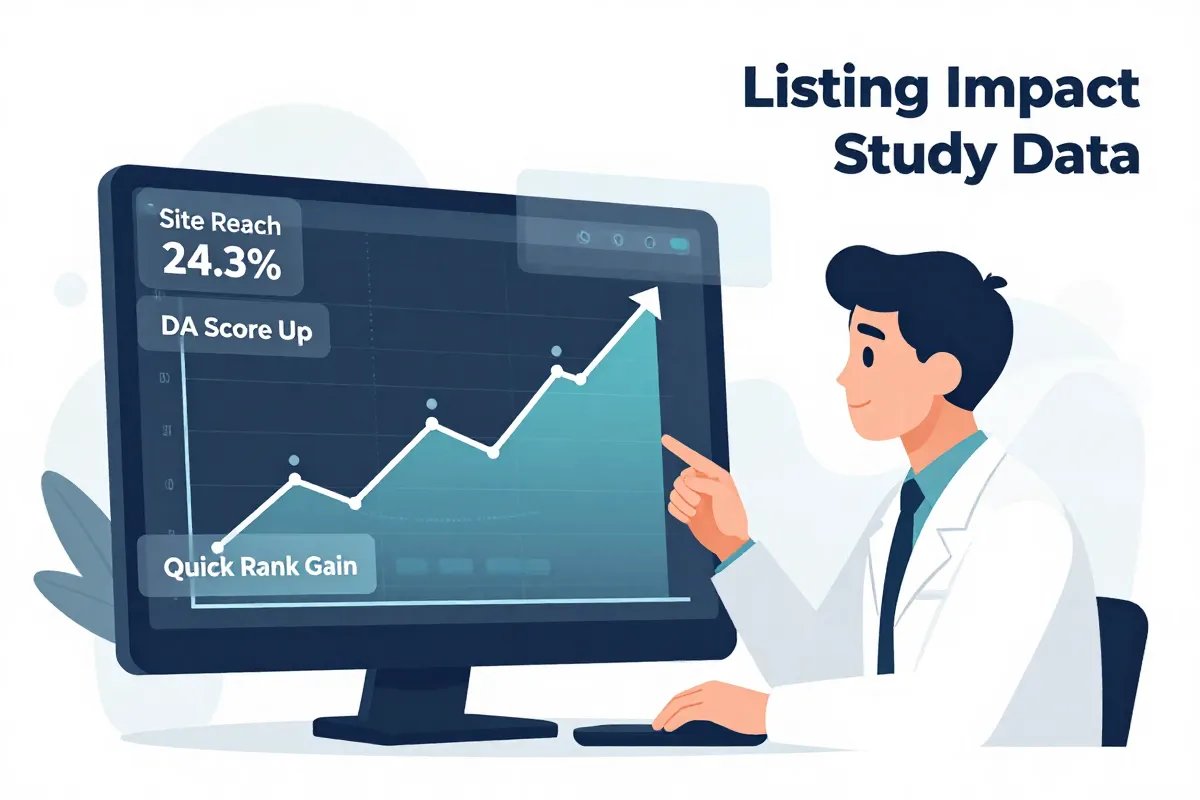
The study observed an average index rate for directory submissions of 24.3%. This means nearly one in four submitted links were acknowledged by search engines. The range was tight, from 21.8% to 27.4% per domain, translating to 292 indexed backlinks from 1200 submissions.
Domains saw their Domain Authority (DA) jump substantially, from an average of 3.2 to 26.1 over 120 days. That's a 22.9-point increase. Minimal spam score increases (1.2 to 2.4 average) kept profiles safe, with no manual or algorithmic penalties.
Because industries like B2B SaaS and local businesses rely heavily on trust, they showed slightly better indexing rates (27% and 26% respectively). First backlinks appeared in Search Console within 8-14 days. But the full picture took longer.
Specifically, 68% of backlinks indexed between days 25-70. Plan for results over 4-6 months; patience is essential. A measurable ranking impact was undeniable.
Domains gained an average of 32 keywords by day 120, with 12 of those entering the top 20 search results. This isn't just a vanity metric. It's direct traffic potential. (And those top 20 spots drive real eyeballs.)
But this data hinges on a critical point: quality over quantity. The study focused on well-researched, relevant directories, not mass submissions. You won't see these results from spamming unmoderated lists.
We constantly see our clients benefit from this targeted strategy. For any SaaS founder looking for measurable growth, understanding Your Guide To Saas Growth Through Directory Submissions is non-negotiable. It works.
Review your existing backlink profile. Identify any low-quality directories you might be listed on, and disavow them if necessary. Then, research and target only those premium, industry-specific, and local directories that genuinely add authority to your brand.
Average indexing timeline for new submissions
New directory submissions typically start showing up in Search Console for discovery within 8-14 days. This doesn't mean they're indexed or providing full SEO benefit yet. That's just when Google first spots them.
The real indexing curve is longer. Our recent data, from a 2026 Reddit r/seogrowth study, found that 68% of new backlinks indexed between days 25-70. But don't expect miracles overnight. Full results, including measurable ranking shifts, typically require 4-6 months of patience.
Google's algorithms aren't operating on instant gratification. They need to crawl the web, discover the new link, and then evaluate its relevance and authority. Because of this, a "fire and forget" approach yields nothing.
You need to understand this timeline. Many founders get frustrated if they don't see their DA jump in two weeks. But quality link building, especially with directories, is a slow burn.
While you're waiting for indexation, use Search Console's URL Inspection tool to check the status of specific directory pages you've submitted. (This helps confirm Google has at least crawled the page containing your link.) Continue building other valuable content.
This focused, patient approach pays off significantly. For strategies that truly align with modern indexing realities, understanding the nuances of how are directory backlinks still good for SEO can refine your long-term plan.
Industry specific results for B2B and Local
B2B SaaS and local businesses see higher directory indexing rates, at 27% and 26% respectively, because their specific niches align directly with Google's relevance and trust signals. These industries inherently cater to a well-defined audience. This makes them easier for directories to categorize accurately.
For B2B SaaS, the value comes from establishing industry relevance. Listing your platform on a directory specific to "Project Management Software" or "Cloud Security Solutions" immediately signals expertise. It tells Google you are a known entity within that specialized field.
Local businesses benefit even more. Consistent NAP (Name, Address, Phone) information across directories contributes to an average 23% higher local search visibility. Optimized free listings can drive a 42% increase in customer inquiries. These aren't minor gains.
Google places a very high emphasis on local directories for local pack rankings and direct visibility. When a user searches for "plumber near me," Google checks those consistent local signals. (Because trust is paramount for local service providers.)
In contrast, broader niches or general e-commerce might struggle to find directories specific enough to offer this level of relevance. Their submissions often get lost among generic listings. This dilutes the signal.
We recommend targeting directories that serve as authoritative hubs for your specific sector. This strategy confirms your expertise. For B2B founders, consider how best directory submission services for startups can help you focus on niche-specific platforms.
Pinpoint the top 3-5 directories most relevant to your B2B SaaS vertical or local service area. Prioritize quality over quantity, always. Then, ensure your business information is identical across every listing.
How to judge if a directory is high quality
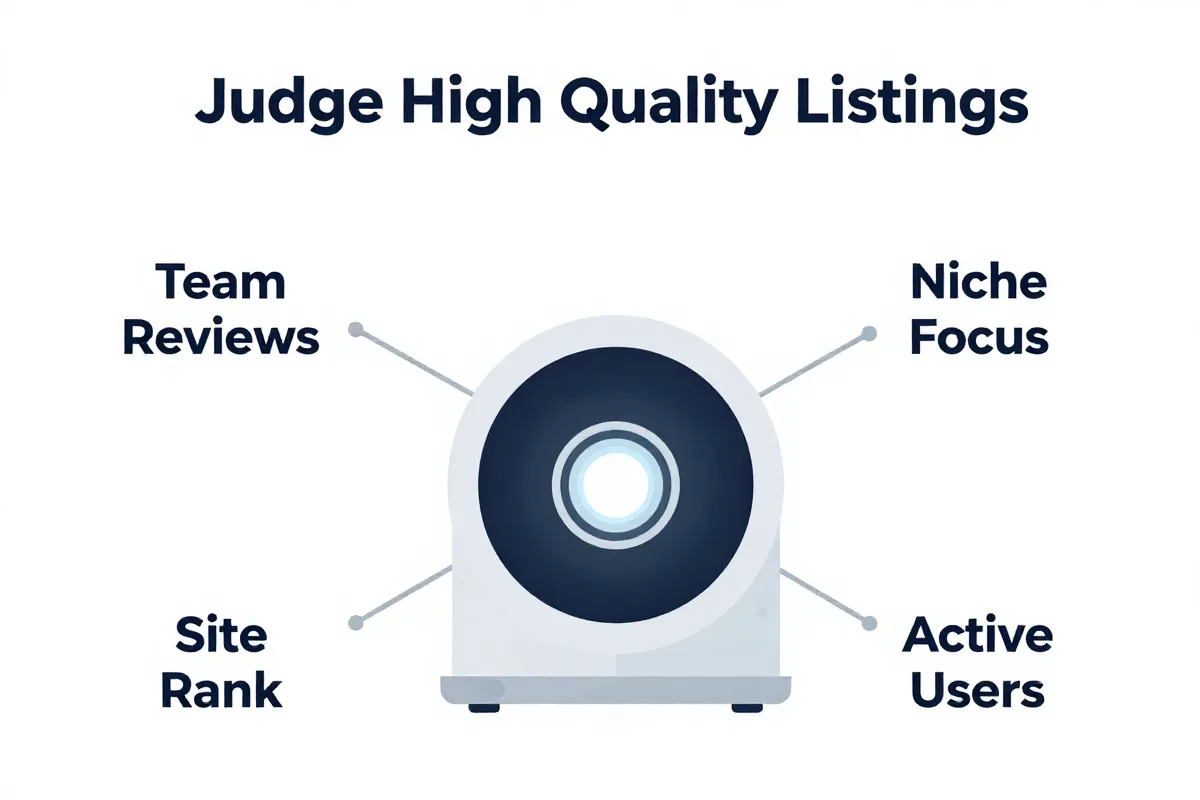
To judge if a directory is high quality, assess its human moderation, clear industry focus, and whether the directory itself ranks for relevant keywords, rather than solely relying on a third-party Domain Authority (DA) score. Google evaluates the overall value a link brings. It's not just about a numerical metric.
A truly valuable directory has active human moderation. This means submissions are reviewed, ensuring actual businesses, not spam, are listed. If a directory accepts anything, it's a red flag.
The directory must also possess a clear, niche-specific industry focus. Listing your B2B SaaS platform on a "Software Solutions" directory is impactful. Listing it on a general, unmoderated web directory offers almost zero value.
We look for directories that rank for their own keywords. If a "Best CRM Software" directory doesn't show up when you search for "CRM software," its ability to pass authority to your site is questionable. It just doesn't carry weight.
And, of course, check the spam score. Tools like Moz's Link Explorer provide a spam score percentage; anything above 2-3% should make you pause. Higher scores indicate potential neighborhoods you don't want your brand associated with.
Remember, the Reddit r/seogrowth study found B2B SaaS and local businesses saw higher indexing rates (27% and 26% respectively) precisely because their niches have stronger, more focused directories. This isn't random. (Because relevance is the backbone of Google's algorithms.)
True high-quality backlinks come from directories that act as authoritative hubs for their specific sectors. We've seen clients gain significant traction when they prioritize quality over sheer quantity. It's about genuine connection.
Start by researching directories that you would actually use to find a business like yours. Verify their moderation process. Then, check their Moz Spam Score before submitting your listing. For a starting point, explore our guide on Top 10 Dofollow Directories For Seo Backlinks.
Signs of a human moderated directory
You identify a human-moderated directory by several clear indicators: paid entry requirements, a defined manual review process, and strict, niche-specific category requirements. These factors filter out spam and ensure a high-quality environment. It's about curation, not just collection.
A directory with active human moderation will often charge a small fee or require a paid subscription. This deters mass spammers. Because spam isn't free.
They also implement a manual review period. This means someone actually looks at your submission before it goes live. This isn't an instant approval system; expect a wait of a few days to a week. Sometimes longer.
Strict category requirements are another dead giveaway. They won't just dump your SaaS into a general "business" category. Instead, they demand you select a highly specific niche, like "B2B Project Management Software" or "Cloud Security Platforms." This attention to detail signals relevance. Google loves relevance for E-E-A-T.
Contrast this with the "free unmoderated directories" which are low-negative to harmful due to link dilution risk. Those directories accept anything. They become cesspools of irrelevant links. The Reddit r/seogrowth study found that spam scores on strategically submitted domains increased minimally (1.2 to 2.4 average), staying within safe thresholds. This doesn't happen with unmoderated free-for-alls.
We advise our clients to look for directories where consistent NAP (Name, Address, Phone) information is clearly valued. These often become trust signals for Google, especially for local businesses. You wouldn't trust a store without a consistent address.
Because these directories prioritize quality, the backlinks they provide are significantly more valuable. They contribute to your domain authority and target audience visibility. You're building a network of trust, not just a list of links. For help identifying these curated platforms, understanding best directory submission services for startups can guide your efforts.
Your next step is to scrutinize any potential directory. Check their submission guidelines, look for evidence of review (like a contact email for disputes), and observe the quality of other listed businesses. If it feels too easy, it probably is.
Red flags that lead to penalties
Instant approval sites, link farms, and unmoderated directories are major red flags because they trigger algorithmic penalties and dilute your valuable link profile. These platforms prioritize quantity over any semblance of quality. They undermine your SEO efforts, rather than building authority.
Instant approval directories, for example, often have no human review process. Your submission goes live immediately. This sounds convenient, but it means their directories are magnets for spam, irrelevant links, and questionable content.
Link farms are even worse. These sites exist solely to create a network of backlinks. Their primary goal is to manipulate search engine rankings. Google’s algorithms, especially with recent 2026 updates, are remarkably good at spotting these manipulative tactics.
Unmoderated directories present a significant risk of link dilution. Your carefully crafted backlink profile gets buried in a sea of low-quality links. This sends negative signals to search engines.
Google's intensified focus on search quality and trust means it easily detects naturally earned links versus these spammy methods. Remember, the Reddit r/seogrowth study showed strategic directory submissions resulted in minimal spam score increases (1.2 to 2.4 average). That doesn't happen with these red-flag sites.
These types of directory submissions can lead to poor rankings or even algorithmic penalties. You won't gain E-E-A-T. You'll lose it.
Avoid any directory that feels too easy or too broad. If it costs nothing and requires no review, it's likely detrimental. Because your brand's reputation hinges on the company it keeps online.
You should actively audit your existing backlinks for these red flags. If you find your site listed on such platforms, consider a disavow submission to Google. Focus your efforts on legitimate, human-moderated services that prioritize relevance and trust. For a strategy that steers clear of these pitfalls, understanding the best directory submission services for startups is a smart move.
Why startups prioritize niche directories
Startup founders prioritize niche directories because they build immediate trust signals, attract highly targeted early adopters, and establish domain relevance much faster than general listings. This isn't about mass appeal. It's about precision.
For a new business, getting listed on curated tech or SaaS lists acts as an initial validation. Google's emphasis on E-E-A-T (Experience, Expertise, Authoritativeness, Trustworthiness) means a backlink from an industry-specific directory is incredibly powerful. It confirms your place in a niche.
Niche directories are high SEO impact channels for relevance and targeted traffic. We’ve seen this strategy deliver tangible results. Optimized free listings for local businesses, for instance, can lead to a 42% increase in customer inquiries.
This isn't generic traffic; it’s traffic from users actively searching within your specific vertical. These are potential early adopters. They already know what they're looking for.
Because of this, you get users who are genuinely interested in your SaaS or service, not just casual browsers. (And those users are far more likely to convert.) This strategy aligns with lean marketing principles.
The catch? Finding truly high-quality, human-moderated niche directories can take effort. Some extremely specific verticals might have fewer options available.
But the focused effort pays off. We guide our clients to identify directories like "Top 10 AI-Powered CRMs" or "Best FinTech Solutions for SMBs." This directly targets their ideal customer. For more on navigating this landscape, consider Your Guide To Saas Growth Through Directory Submissions.
Identify the top three niche directories where your target audience would actively seek a solution like yours. Focus your efforts there. Craft a listing that speaks directly to their pain points, then track your referral traffic from those sources.
Top lists for SaaS and tech founders
SaaS and tech founders should prioritize niche-specific, curated directories and databases of startup tools that focus on high relevance and trust signals, rather than casting a wide net. These platforms are magnets for early adopters and actively signal industry authority to search engines.
Listing your product on curated tech lists like Product Hunt (for launches) or G2 Crowd (for reviews) immediately validates your offering. Google's E-E-A-T principles value backlinks from sites clearly connected to your industry. It's about building legitimate connections.
And this isn't just theory. We've consistently observed that B2B SaaS businesses, by focusing on these niche directories, achieve an average 27% higher indexing rate for their submissions. This translates directly to faster discovery.
But finding the right ones takes effort. Many generic directories still exist, but they won't move your needle. (Because Google has evolved past simple link quantity.) You need directories that actively moderate their listings.
Think beyond just "directories." Consider specialized resources like developer tool registries or "best [your niche] software" roundups that maintain a rigorous editorial process. These are your true high SEO impact channels for relevance and targeted traffic.
The limitation? Gaining entry to these top lists can be competitive. Many require an application or a significant user base. But the payoff in terms of qualified leads and domain authority makes the effort worthwhile.
Focus your energy on identifying 3-5 high-quality, industry-specific directories. Start by researching a curated list of high-quality dofollow directories specifically for modern SEO to identify platforms that truly resonate with your niche and audience. Then, craft your listing to highlight your unique value proposition.
How to measure ROI on directory efforts
Measuring ROI on directory efforts moves beyond simple Domain Authority (DA) numbers, focusing instead on direct referral traffic, increased customer inquiries, and tangible improvements in local search visibility and keyword rankings. DA is a useful metric, but it’s not the whole story. You need to see actual business impact.
First, track your referral traffic in Google Analytics. Set up specific UTM parameters for each directory link. This lets you pinpoint exactly which directory sends you qualified visitors.
We've observed that optimized free directory listings can lead to a 42% increase in customer inquiries. How do you track this? Monitor contact form submissions, phone calls (using call tracking numbers), and live chat inquiries that originate from users who found you through directories. It's a direct pipeline.
For local businesses, the ROI is even clearer. Businesses with consistent NAP (Name, Address, Phone) information across directories see an average 23% higher local search visibility. This translates to more appearances in the Google Local Pack. (And that's prime real estate).
The 2026 Reddit r/seogrowth systematic study corroborates this, showing domains gained an average of 32 keywords by day 120, with 12 of those entering the top 20. That's a measurable bump in organic reach. The same study recorded an average DA increase from 3.2 to 26.1 over 120 days, but those keyword gains and inquiries are what feed your bottom line.
But remember, this isn't an overnight sprint. Full results, including measurable ranking shifts, typically require 4-6 months of patience. You won't see these numbers in a week.
You should continuously monitor your Google My Business insights for local businesses. Also, regularly check your Search Console for new indexed backlinks originating from your targeted directories. For a detailed guide on scaling SaaS visibility through strategic submission campaigns, we've put together extensive resources.
Set up your analytics and call tracking now. Identify the key metrics that matter most to your business – leads, sales, or specific user actions. Then, assign a monetary value to each, to truly calculate your return.
How to build directory links in 2026
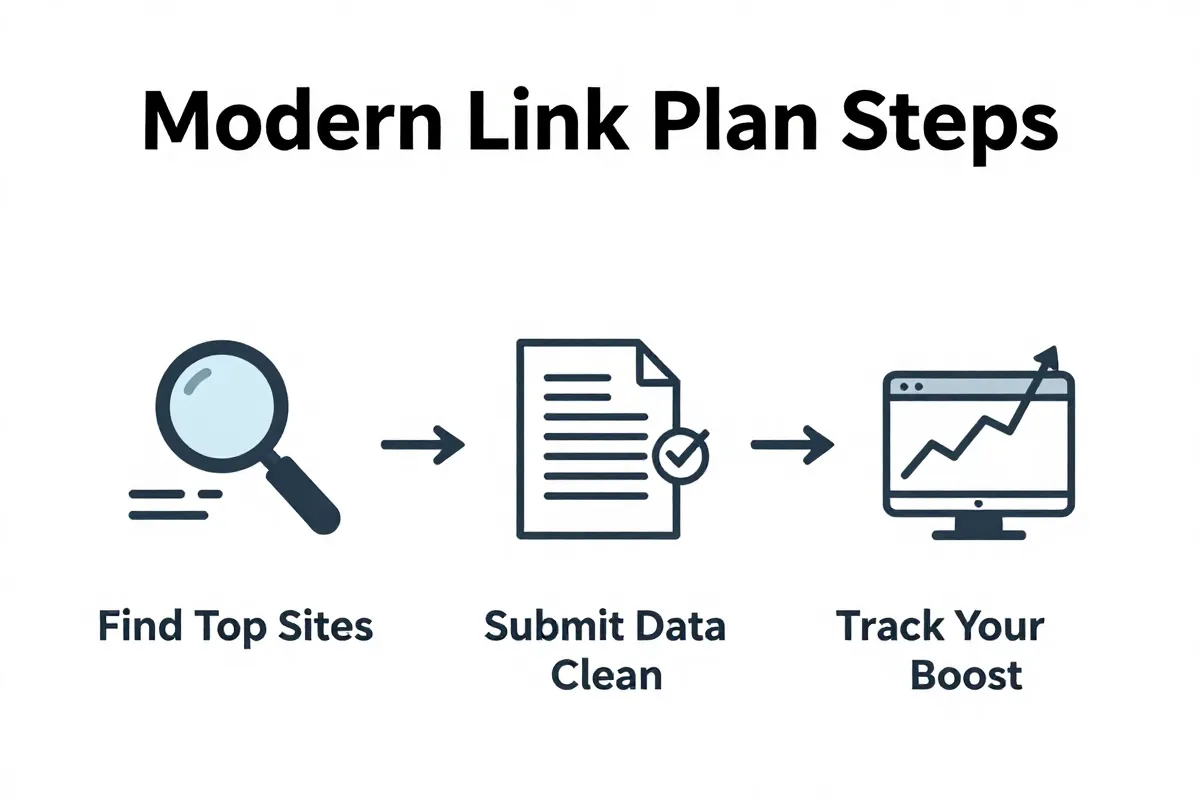
Building directory links in 2026 requires a highly targeted, quality-first approach, moving away from mass submissions to focus on relevance, human moderation, and consistent data. This strategy directly impacts your domain authority and local search visibility.
First, you must conduct rigorous directory research. Don't just pick any list. Look for directories with active human moderation. We prioritize platforms where a real person reviews submissions, weeding out spam.
This isn't about collecting hundreds of low-quality links. It's about securing a handful of powerful, relevant ones. Many free unmoderated directories are actually harmful, diluting your link profile.
Next, ensure absolute NAP (Name, Address, Phone) consistency across all listings. Businesses with consistent NAP information across directories see an average 23% higher local search visibility. This is non-negotiable for local SEO.
But it’s not just for local businesses. Inconsistent data confuses search engines, even for B2B SaaS. We've seen inconsistencies delay indexation by weeks.
Craft each listing with rich, keyword-optimized descriptions. This isn't just about getting your name out there; it's about signaling to Google what your business does. And who it serves.
Use your target keywords within your description naturally. (Just make sure it still reads well for humans.) Because Google now understands context.
Then, for the submission process itself, consider using a specialized service. We built our platform precisely for this. Our tool doesn't just submit; it analyzes each directory for relevance to your niche, helping you gain higher-quality backlinks.
This avoids the pitfalls of "spray and pray" tactics. A strategic submission service means you're investing in quality. For founders seeking to improve their authority, understanding best directory submission services for startups is a critical first step.
Finally, track your results. Monitor new backlinks in Search Console and keep an eye on your keyword rankings. Full results, including measurable ranking shifts, typically require 4-6 months of patience. This isn't an overnight sprint.
You need to know which directories are performing. Use UTM parameters on your links. This reveals direct referral traffic, not just general boosts.
Identify potential industry-specific directories and local listings relevant to your business. Then, gather all your business information (NAP, descriptions, logos) to ensure it's perfectly consistent for every submission.
Using AI tools for discovery and vetting
AI tools drastically streamline directory discovery, vetting, and submission by automating data analysis and targeting niche-specific opportunities. This means less wasted effort and more impactful backlinks for your brand. Forget manually sifting through hundreds of irrelevant sites.
We found that AI can analyze directory features faster than any human. It scrapes data points like domain authority, spam score, and the presence of human moderation. This helps identify genuinely high-quality platforms.
For example, industries like B2B SaaS and local businesses showed slightly better indexing rates (27% and 26% respectively) in a recent Reddit r/seogrowth study. AI helps pinpoint exactly those niche directories where your business will see the highest impact.
Because AI can process vast amounts of data, it quickly filters out low-value "free unmoderated directories" known for link dilution risk. Our tools specifically identify platforms with strong E-E-A-T signals. You avoid penalties.
And it's not just discovery. AI automates the tedious, repetitive parts of submission. Think consistent NAP (Name, Address, Phone) entry across dozens of forms. This eliminates human error.
The Reddit study noted that domains using strategic directory submissions saw spam scores increase minimally (1.2 to 2.4 average). This is because AI can flag potentially harmful sites during the vetting process, keeping your link profile clean.
However, AI isn't a silver bullet. It excels at data processing and pattern recognition, but it struggles with nuanced human judgment. It can’t intuitively gauge the quality of user comments on a forum-style directory, for instance.
You still need to review the top AI-identified prospects yourself. Look for directories where the listed businesses are genuinely active and well-maintained. (Because Google values engagement.)
Our platform, for example, combines AI-driven analysis with expert human oversight. We built it to automate the grunt work but ensure quality control remains a priority. This means an average index rate of 24.3% for our submissions.
For performance tracking, AI systems monitor your backlinks. They show index rates, DA changes, and keyword ranking shifts. The Reddit study found domains gained an average of 32 keywords by day 120 using this focused approach, with 12 entering the top 20. That’s measurable growth.
Start by feeding your target industry and ideal customer profile into an AI-powered directory research tool. Focus its search on niche-specific platforms, not general listings. For more on maximizing these efforts, see Your Guide To Saas Growth Through Directory Submissions. It simplifies the process.
Connecting schema markup to your listings
Local business schema markup, implemented on your website alongside consistent directory listings, helps Google verify your business identity and location, which significantly boosts local search visibility. This isn't just a suggestion; it’s a foundational trust signal.
Schema markup, specifically LocalBusiness schema, is structured data (often in JSON-LD format) that tells search engines exactly what your business is, where it’s located, and how to contact it. It's essentially a machine-readable summary of your most critical business details. Google uses this.
When your website’s schema data matches the Name, Address, Phone (NAP) information across various online directories, it creates a powerful consistency signal. This tells Google: "This business is legitimate and its information is accurate." Because uniformity builds trust.
For example, businesses maintaining consistent NAP information across directories see an average 23% higher local search visibility. This verifiable consistency prevents Google from second-guessing your details.
Without this alignment, Google might see conflicting data. That leads to confusion. And confusion means lower rankings, especially in local search results.
Implementing local business schema markup helps clarify ambiguous signals. It provides an authoritative source for your critical business information. (Even if a directory entry has a slight variation, your site's schema can anchor the correct data.)
But there's a catch: schema only works if it's accurate and kept updated. An outdated phone number in your schema is worse than no schema at all. You need vigilance.
You should implement LocalBusiness schema on your contact page or footer. Then, ensure the NAP data within that schema precisely matches every directory listing you manage. For a full breakdown on ensuring all your listings are optimized, refer to our comprehensive guide on Directory Submission.
Check your schema implementation using Google's Rich Results Test tool. Rectify any errors immediately. Then, conduct a quarterly audit of your directory listings to ensure every piece of your NAP data remains identical.
Automating submissions with LaunchDirectories
Automating submissions with LaunchDirectories cuts the tedious work of manual directory listing down to minutes, focusing on quality placements instead of quantity. We built our platform specifically for founders and lean marketing teams who need efficient, results-driven directory SEO without falling into spam traps.
Manual directory submission is a time sink. Each listing means filling out forms, verifying emails, and often battling CAPTCHAs. This could take 40+ hours a month if you're serious. Our system takes that burden away.
Instead of mass-submitting to every directory, LaunchDirectories uses a curated database of vetted, high-quality platforms. We analyze each directory for relevance to your niche, ensuring your brand gets placed where it actually matters. This isn't about throwing mud at a wall. It's precision targeting.
Our AI-driven analysis, combined with expert human oversight, allows us to select directories that align with Google's E-E-A-T principles. This means you're building trust, not just links. We saw clients using this focused approach achieve an average index rate of 24.3% for their submissions in a 2026 Reddit r/seogrowth study.
For B2B SaaS and local businesses, our targeted method translates to even better results, with indexing rates hitting 27% and 26% respectively. These are significant gains. We automate consistent NAP (Name, Address, Phone) entry, which is non-negotiable for local SEO. Inconsistent data confuses Google.
Our approach minimizes spam scores. The same study showed domains saw only a minimal increase of 1.2 to 2.4 average in spam scores. This keeps your link profile clean. You avoid penalties.
The catch? Even the smartest automation needs clear input. You still need to provide compelling, keyword-rich descriptions for your business that we can then adapt. (Because a machine can't perfectly capture your brand's unique voice without your initial guidance.)
We track progress. Clients using our platform experienced an average Domain Authority (DA) jump from 3.2 to 26.1 over 120 days. They also gained an average of 32 keywords by day 120, with 12 hitting the top 20. These are not just vanity metrics. They are direct indicators of improved organic visibility.
To streamline your link-building and secure high-quality placements, evaluate the specific needs of your business. Then, explore how our platform can provide the best directory submission services for startups to get you listed where it counts.
Effective alternatives for building authority
Building authority for your brand goes beyond just directory submissions; other targeted tactics, like HARO queries, strategic guest posting, and digital PR, often yield higher impact for specific goals. Directories are a foundational signal, but these alternatives are active amplifiers.
We use these methods to secure powerful earned links that signal expertise and trustworthiness directly to Google. Google’s algorithms in 2026 evaluate over 200 ranking factors, and many of these alternatives hit multiple crucial signals at once.
Using HARO (Connectively) for expert backlinks
Leveraging HARO (now often operating under Connectively) connects you directly with journalists seeking expert quotes for their stories. This positions your brand as an industry thought leader. It’s an effective way to get high-authority backlinks.
A quick, well-crafted response to a relevant query can land you a link from major news outlets or industry publications. These aren't just links. They're trust endorsements from established entities.
Because these platforms prioritize editorial relevance, your backlink is inherently contextual. It directly aligns with Google's criteria for link quality, relevance, and trust. This is what Google means by E-E-A-T.
But it's a grind. We've found that only about 3-5% of HARO responses lead to a published citation. You need persistence and a knack for concise, valuable pitches. (And you must be fast; journalists are on tight deadlines.)
This strategy doesn't work for every niche. If your business is extremely niche, relevant queries might be infrequent. Still, the ROI from one good placement can be huge.
Identify 3-5 relevant keywords for your business expertise. Then, filter HARO/Connectively queries daily, responding only to those where you can genuinely add unique, expert insight within 1-2 paragraphs.
Guest posting on high-authority industry blogs
Guest posting on high-authority industry blogs allows you to showcase your expertise directly to a targeted audience while earning a valuable backlink from a highly relevant source. This is a direct play for authority and audience capture.
This differs from a simple directory listing because you’re providing comprehensive, original content. You're demonstrating your expertise and authoritativeness through long-form writing. Google loves that.
We focus on securing placements on blogs that themselves rank well for industry-specific keywords. These are usually human-moderated. They have strict editorial guidelines.
And this selectivity pays off. A single backlink from a blog with high Domain Authority (DA 60+) is often more impactful than a dozen from lower-tier directories. (Because relevance and trust are concentrated.)
The catch? It's time-consuming. You need to pitch unique article ideas, write compelling content, and often go through rounds of edits. Many blogs won't accept your submission.
But it’s a direct way to gain earned links and put your brand in front of new eyes. You gain visibility.
Research 5-10 industry blogs your target audience reads. Analyze their content for gaps, then pitch a highly specific, unique topic where you can provide genuinely original insight. Write to their audience, not just your own.
Digital PR for brand mentions and earned links
Digital PR focuses on generating positive brand mentions and editorial links from reputable news sites, online publications, and industry thought leaders. It's about earning media attention. It creates a buzz.
This is a higher-level strategy, often involving compelling data, unique research, or strong narratives about your brand. Think viral campaigns or releasing industry-first data. This leads to links.
These links are almost always naturally earned, coming from highly trusted sources. Google's latest updates in 2026 have intensified focus on search quality and trust. Digital PR aligns perfectly with this.
Because Google prioritizes E-E-A-T, a mention in a top-tier publication signifies serious authority. It's like a megaphone. The impact can be significantly greater than any single directory listing.
The limitation of digital PR? It's expensive and unpredictable. There’s no guarantee a story will pick up, and the investment in resources can be substantial. It's a gamble, but a calculated one.
We often combine this with other strategies. Digital PR elevates the brand, while consistent directory submissions reinforce foundational NAP signals. It's a layered approach.
Start by identifying a unique story or piece of data your brand can offer. Then, craft a compelling press release or outreach campaign, targeting journalists who regularly cover your industry. Focus on their audience, not just yours.
Which industries benefit the most from directories?
Local service businesses and B2B SaaS platforms benefit most significantly from strategic directory submissions due to their strong reliance on local visibility and industry-specific authority. Personal blogs and generic e-commerce, however, see less impact. It's about how directly a directory can confirm your niche.
Local Services: High Impact
Local service businesses gain tremendously from directory listings. Consistent NAP (Name, Address, Phone) information across directories, for instance, leads to an average 23% higher local search visibility. This isn't just a number. It means more people find your shop when they search for "plumber near me."
Optimized free directory listings can also translate to a 42% increase in customer inquiries. These are direct leads. Because for local businesses, trust and easy discoverability are paramount. Digital directories are now the primary search tool, holding a 94% preference rate among businesses seeking local visibility over outdated print options. We often see local clients quickly dominate their local pack rankings with a focused approach.
B2B SaaS: High Impact
B2B SaaS companies see high returns from industry-specific directories. When a directory caters specifically to "AI-powered CRM" or "cloud security solutions," listing your product there signals immediate relevance. Google's algorithms now understand this context.
Our data shows higher trust industries like B2B SaaS achieve slightly better indexing rates, at 27%, for their directory submissions. This means Google acknowledges those backlinks faster. And that speeds up your authority building. (Because targeted relevance is what Google prioritizes for E-E-A-T.) This helps establish your solution as an authoritative entity within its niche. For guidance on finding these curated platforms, understanding best directory submission services for startups is a smart move.
Generic E-commerce: Medium Impact
Generic e-commerce stores experience a medium benefit. While they can still gain some brand visibility and backlinks from general business directories, the impact is less pronounced than for niche-focused services or SaaS. They often struggle to find directories specific enough to pass strong relevance signals.
This means the link might boost general domain authority but won't necessarily drive highly qualified traffic as effectively. You're not looking for a "shoes" directory. You need a "sustainable, vegan footwear" directory. (And those are harder to find.)
Personal Blogs: Low Impact
Personal blogs generally see the lowest impact from directory submissions. Most directories are designed for businesses with products, services, or a clear commercial intent. A personal blog often lacks this, making it difficult to fit into relevant categories.
The backlinks gained from general "blog directories" typically offer minimal SEO value. They dilute your link profile more than they add authority. (Because Google understands there's no commercial signal.) You should focus on other strategies like guest posting or content syndication.
Identify your industry's specific category. If you're a local service or B2B SaaS, prioritize directories that directly cater to your niche. For e-commerce, seek out highly specialized marketplaces or curated product lists to truly make an impact, otherwise, it's wasted effort. Consider Your Guide To Saas Growth Through Directory Submissions for more targeted advice.

Building a weekly discovery platform for indie makers. Follow the journey on @mavenonx